English
- English
- Español
- Português
- русский
- Français
- 日本語
- Deutsch
- tiếng Việt
- Italiano
- Nederlands
- ภาษาไทย
- Polski
- 한국어
- Svenska
- magyar
- Malay
- বাংলা ভাষার
- Dansk
- Suomi
- हिन्दी
- Pilipino
- Türkçe
- Gaeilge
- العربية
- Indonesia
- Norsk
- تمل
- český
- ελληνικά
- український
- Javanese
- فارسی
- தமிழ்
- తెలుగు
- नेपाली
- Burmese
- български
- ລາວ
- Latine
- Қазақша
- Euskal
- Azərbaycan
- Slovenský jazyk
- Македонски
- Lietuvos
- Eesti Keel
- Română
- Slovenski
- मराठी
- Srpski језик

How Can a Fillet Weld Fitting Improve the Strength, Stability, and Reliability of Industrial Piping Systems
Fillet Weld Fitting is an important welded connection component for industrial piping, structural reinforcement, and heavy-duty engineering systems. JIDONGDA provides engineered fitting solutions designed to create continuous welded connections, improve load distribution, and support reliable operation in demanding industrial environments.
A properly designed Fillet Weld Fitting can do more than simply connect two components. By creating a permanent welded transition, it helps establish a continuous load path and reduces the mechanical weaknesses that can occur at conventional connection points. This makes fillet-welded solutions valuable for structural piping, auxiliary pipelines, reinforcement joints, steel structures, shipbuilding, and other industrial applications.
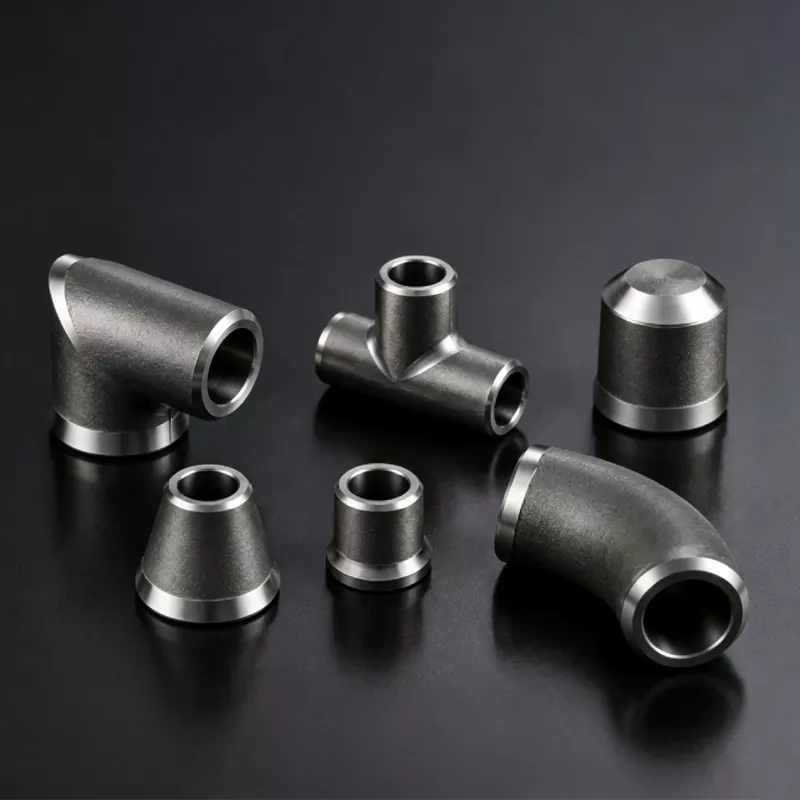
Table of Contents
- What Is a Fillet Weld Fitting?
- Why Does Continuous Welding Matter in Industrial Systems?
- What Technical Specifications Should Buyers Consider?
- What Are the Key Advantages of Fillet Weld Fittings?
- How Does Manufacturing Quality Affect Welded Performance?
- Where Are Fillet Weld Fittings Used?
- How Should You Select the Right Fillet Weld Fitting?
- Frequently Asked Questions
- Conclusion
What Is a Fillet Weld Fitting?
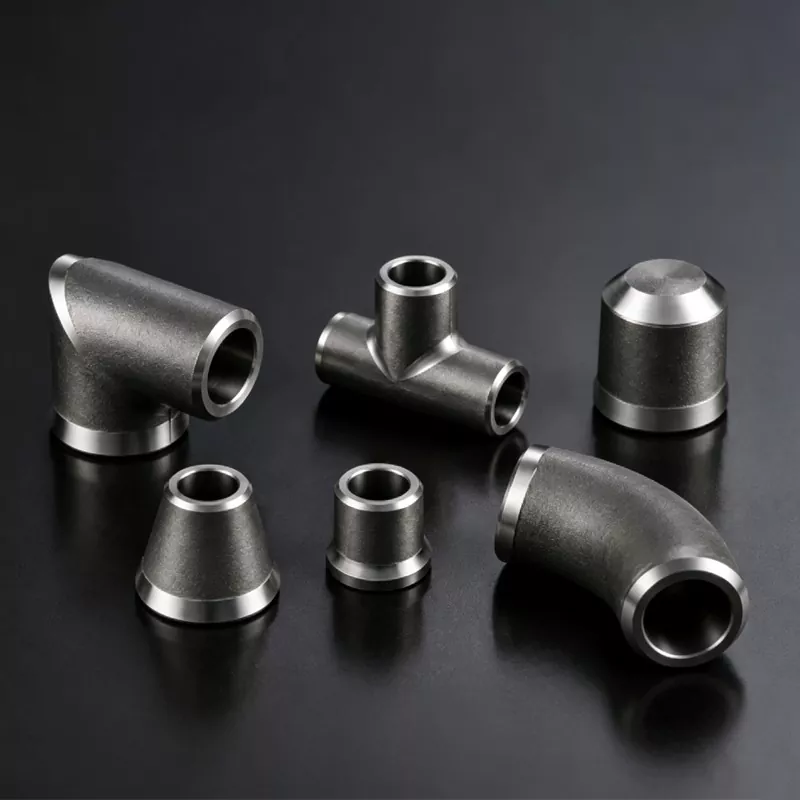
A Fillet Weld Fitting is a welded connection component designed to join or reinforce industrial piping and structural assemblies through an external fillet-welding method. Instead of depending on threads, bolts, or other detachable mechanical connections, the fitting becomes integrated with the surrounding structure after welding.
The fundamental purpose is to establish a stable connection capable of transferring mechanical forces through the welded interface. When properly designed and fabricated, this type of connection can help distribute loads across a broader area instead of concentrating them at a single mechanical contact point.
For engineers, the distinction is important. A mechanical connector creates a connection between separate components, while a welded fitting can form a more integrated structural transition. This characteristic makes welded solutions attractive for applications where vibration, repeated loading, space limitations, and long service life are major considerations.
JIDONGDA's product information identifies its Fillet Weld Fitting as a solution for structural piping, reinforcement joints, and auxiliary pipelines, with options suitable for different industrial operating conditions.
Why Does Continuous Welding Matter in Industrial Systems?
Connection areas are often among the most critical points in an industrial system. Pipes, structural members, and auxiliary components may experience vibration, pressure fluctuations, mechanical loads, thermal expansion, and repeated operating cycles.
If these forces are concentrated around isolated connection points, localized stress can become a concern. A continuous welded interface provides a different load-transfer mechanism by integrating the connected components into a unified assembly.
Several engineering benefits can result from this approach:
- Continuous load transfer: Loads can be distributed along the welded seam rather than relying on isolated mechanical contact points.
- Improved structural stability: A permanent welded connection can help maintain dimensional and structural integrity during operation.
- Reduced loosening risk: Unlike some mechanical fasteners, a properly executed welded connection does not depend on thread tension remaining intact.
- Compact installation: Welded connections can be advantageous where installation space is limited.
- Suitability for demanding environments: Welded assemblies are commonly considered for heavy industrial and vibration-prone applications.
However, weld quality remains critical. Design geometry, material compatibility, welding procedure, surface preparation, inspection, and operating conditions must all be evaluated before a component is selected for a particular application.
What Technical Specifications Should Buyers Consider?
When sourcing a Fillet Weld Fitting, buyers should look beyond product appearance and evaluate the technical specifications against the actual piping or structural requirements. The following specifications provide a useful starting point based on JIDONGDA's product information.
| Specification | Available / Reference Information | Why It Matters |
|---|---|---|
| Product Name | Fillet Weld Fitting | Defines the intended welded fitting category |
| Welding Type | External Fillet Weld | Determines the connection and fabrication method |
| Size Range | 1/8"–6" | Helps match the fitting with piping dimensions |
| Pressure Rating | Class 150 / 300 / 600 / 900 | Supports selection according to system pressure requirements |
| Material Options | Carbon Steel, Stainless Steel 304, 316, 316L, Alloy Steel | Allows selection according to strength and environmental requirements |
| Standards | ASME B16.11 / MSS SP-83 / DIN | Provides a reference framework for engineering and procurement |
| Temperature Range | -40°C to +450°C | Helps determine suitability for operating temperatures |
| Surface Treatment | Black / Galvanized / Pickled & Passivated | Supports different environmental and surface-finish requirements |
Actual suitability should always be confirmed against the project design, applicable codes, welding procedure, pressure-temperature conditions, and installation requirements.
What Are the Key Advantages of Fillet Weld Fittings?
1. Integrated Structural Connection
A welded fitting becomes part of the connected assembly after fabrication. This integrated structure can provide a stable connection for applications where permanent installation is preferred.
2. Better Load Distribution
One of the primary advantages of a properly designed welded connection is its ability to transfer forces through the welded interface. This can help reduce excessive concentration of mechanical loads at individual fastening points.
3. Vibration Resistance
Industrial piping and structural equipment can experience continuous vibration. Because welded connections do not depend on removable threaded fasteners, they can eliminate certain loosening mechanisms associated with mechanical connections.
4. Material Flexibility
Different operating environments require different materials. Carbon steel can be suitable for many general industrial applications, while stainless steel grades such as 304, 316, and 316L may be selected where corrosion resistance is a greater consideration. Alloy steel can be considered for applications requiring specific mechanical or temperature performance.
5. Adaptability to Industrial Applications
The combination of different sizes, pressure classes, materials, and surface treatments allows buyers to configure fitting solutions according to the requirements of their piping or structural projects.
How Does Manufacturing Quality Affect Welded Performance?
The reliability of a welded connection begins before the welding operation itself. Dimensional accuracy, material quality, surface preparation, alignment, welding parameters, and inspection all influence the final performance of a fitting.
A professional manufacturing process should therefore focus on controlling each stage rather than treating welding as an isolated production step.
- Material verification: Confirm that the selected material is appropriate for the intended application.
- Dimensional preparation: Maintain accurate fitting geometry and connection dimensions.
- Surface preparation: Remove contamination and prepare the welding area appropriately.
- Alignment control: Maintain consistent positioning before welding.
- Welding process control: Apply suitable welding procedures to achieve a reliable joint.
- Inspection: Check surface condition, dimensional accuracy, and other required quality characteristics.
- Surface treatment: Apply black, galvanized, pickled, or passivated finishes when required by the application.
For large industrial projects, these controls are especially important because a small inconsistency at a connection point can potentially affect installation efficiency and long-term system reliability.
Where Are Fillet Weld Fittings Used?
Fillet Weld Fittings are suitable for a broad range of industrial and structural applications where permanent welded connections are preferred.
- Industrial piping systems: Used in structural piping and auxiliary pipeline assemblies.
- Steel structures: Suitable for reinforcement and structural connection applications.
- Heavy engineering: Used where mechanical strength and long-term structural stability are important.
- Shipbuilding: Welded construction methods can provide integrated structural connections in marine engineering.
- Industrial frameworks: Useful for connecting and reinforcing structural components.
- Vibration-prone systems: Suitable for applications where maintaining connection integrity under repeated movement is important.
JIDONGDA specifically describes the product for structural piping, reinforcement joints, and auxiliary pipelines, while also identifying heavy engineering, steel structures, and shipbuilding among relevant application areas.
How Should You Select the Right Fillet Weld Fitting?
Choosing the right fitting requires more than selecting a nominal size. Procurement teams and engineers should evaluate the complete operating environment.
| Selection Factor | Key Question |
|---|---|
| Size | Does the fitting match the connected pipe or structural component? |
| Pressure | Which pressure class is required for the system? |
| Temperature | Will the operating temperature remain within the product's applicable range? |
| Material | Does the material provide adequate mechanical and corrosion performance? |
| Standard | Which engineering or project standard must the component meet? |
| Surface Treatment | Is black, galvanized, pickled, or passivated treatment required? |
| Application | Is the fitting intended for piping, reinforcement, structural steel, or another assembly? |
| Customization | Does the supplier provide OEM or project-specific customization? |
For buyers comparing a Fillet Weld Fitting supplier in China, it is also useful to assess manufacturing capability, quality-control procedures, communication efficiency, documentation, customization support, and after-sales service rather than comparing unit price alone.
Frequently Asked Questions
Q1: What is the primary purpose of a Fillet Weld Fitting?
A Fillet Weld Fitting is designed to create a permanent welded connection between compatible piping, fittings, or structural components. Its purpose is to establish a stable connection and support efficient load transfer across the welded interface.
Q2: What materials are available for Fillet Weld Fittings?
Common options include carbon steel, stainless steel 304, 316, 316L, and alloy steel. The appropriate material depends on pressure, temperature, corrosion exposure, mechanical requirements, and project specifications.
Q3: What sizes and pressure classes are available?
JIDONGDA lists a size range of 1/8" to 6" and pressure classes of 150, 300, 600, and 900 for this product. Specific selection should be confirmed according to the application and engineering requirements.
Q4: Are Fillet Weld Fittings suitable for vibration environments?
They can be suitable for vibration-prone industrial applications because a properly executed welded connection does not rely on threaded fasteners that may loosen during repeated vibration. However, weld design, fabrication quality, loading conditions, and applicable engineering standards must be evaluated.
Q5: Which standards are associated with this type of fitting?
JIDONGDA identifies ASME B16.11, MSS SP-83, and DIN as applicable standard references for its Fillet Weld Fitting. Buyers should confirm the exact standard and compliance requirements for their project before ordering.
Q6: Can the surface treatment be customized?
Available surface treatment options listed by JIDONGDA include black, galvanized, and pickled and passivated finishes. Project-specific requirements should be discussed with the manufacturer before production.
Conclusion: Why Is the Right Fillet Weld Fitting Important?
A high-quality Fillet Weld Fitting can contribute to stronger, more stable, and more reliable industrial assemblies by creating an integrated welded connection. From structural piping and auxiliary pipelines to steel construction and heavy engineering, the right combination of material, dimensions, pressure rating, welding method, standards, and surface treatment can make a significant difference to system performance.
For engineering companies, distributors, and industrial procurement teams seeking a dependable China Fillet Weld Fitting manufacturer and supplier, JIDONGDA offers fitting solutions supported by multiple material options, pressure classes, sizes, surface treatments, and OEM customization capabilities. If you are evaluating specifications, requesting a quotation, or looking for a fitting solution tailored to your project, contact us to discuss your requirements and obtain professional product support.
Related News
- How Can a Wire Reinforced Large Diameter Flanged Rubber Hose Improve Heavy-Duty Material Transfer Efficiency
- How Can a Large Diameter Heavy-Duty Flanged Rubber Hose Improve Reliability in Demanding Industrial Applications
- Why Should You Choose a Stainless Steel 316L Ferrule for Reliable, Corrosion-Resistant Piping Connections
- How Can a Large Diameter Flexible Flanged Rubber Hose Improve Heavy-Duty Pipeline Connections
- How Can a Double Sphere Rubber Expansion Joint Improve Pipeline Flexibility and Vibration Control
- How Can a Corrugated Metal Expansion Joint Improve the Reliability of High-Temperature Piping Systems
Leave me a message