English
- English
- Español
- Português
- русский
- Français
- 日本語
- Deutsch
- tiếng Việt
- Italiano
- Nederlands
- ภาษาไทย
- Polski
- 한국어
- Svenska
- magyar
- Malay
- বাংলা ভাষার
- Dansk
- Suomi
- हिन्दी
- Pilipino
- Türkçe
- Gaeilge
- العربية
- Indonesia
- Norsk
- تمل
- český
- ελληνικά
- український
- Javanese
- فارسی
- தமிழ்
- తెలుగు
- नेपाली
- Burmese
- български
- ລາວ
- Latine
- Қазақша
- Euskal
- Azərbaycan
- Slovenský jazyk
- Македонски
- Lietuvos
- Eesti Keel
- Română
- Slovenski
- मराठी
- Srpski језик
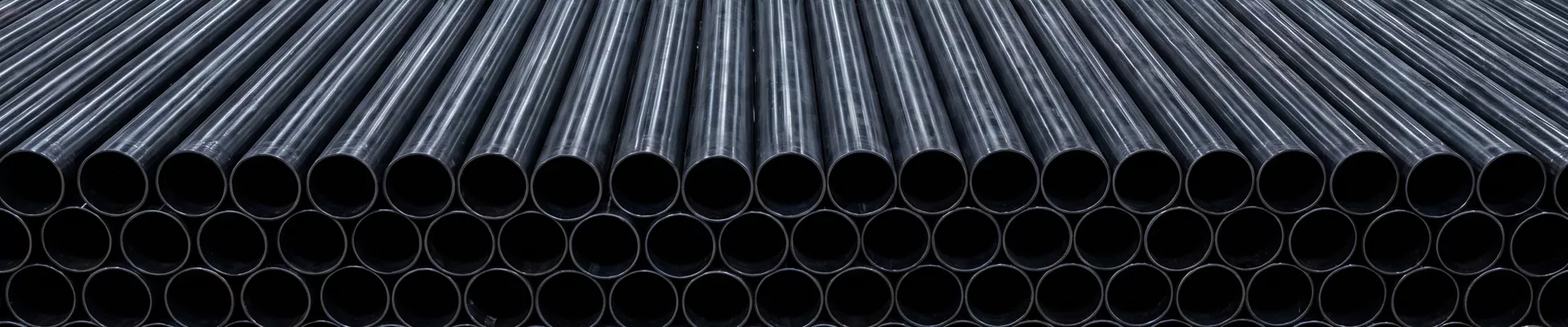
China Metal Expansion Joint Supplier
In modern piping and ducting systems, managing thermal expansion, vibration, and mechanical movement is critical to maintaining long-term reliability. A Metal Expansion Joint is a flexible connector engineered to absorb these movements while safely containing the internal fluid or gas. Unlike rigid connections, a metal expansion joint uses one or more convoluted metallic bellows to provide axial, lateral, and angular flexibility. This prevents stress accumulation that could lead to pipe fatigue, flange leakage, or structural damage. At JIDONGDA, we design expansion joints that combine high-grade materials with precision manufacturing to serve power generation, petrochemical, HVAC, shipbuilding, and industrial gas markets.
Key Types and Applications
Not all expansion joints are interchangeable. JIDONGDA supplies several configurations tailored to specific movement requirements and installation constraints:
- Axial Expansion Joints – absorb movement along the pipe axis; commonly used in long straight pipe runs where anchors are spaced at calculated intervals.
- Universal Expansion Joints – consist of two bellows connected by a center spool, enabling large axial, lateral, and angular motion; ideal for complex piping layouts and low spring-rate requirements.
- Hinged Expansion Joints – restrict movement to a single plane of angular rotation, often applied in sets of two or three to absorb lateral deflection in a controlled manner.
- Gimbal Expansion Joints – allow angular motion in multiple planes, used where the piping experiences complex thermal displacements without transferring pressure thrust.
- Pressure Balanced Expansion Joints – eliminate pressure thrust loads by balancing the bellows area; suitable for locations where main anchors cannot accommodate high thrust forces.
Why Choose JIDONGDA as Your Expansion Joint Supplier
With decades of engineering experience and specialized manufacturing facilities, JIDONGDA delivers expansion joints that exceed expectations. We focus on five core pillars:
- Custom Engineering: Every single order is reviewed by our in-house design team using finite element analysis (FEA) to verify stress distribution, column stability, and fatigue life according to EJMA guidelines.
- Stringent Quality Control: All bellows undergo in-process inspections, including dye penetrant testing, dimensional checks, and hydrostatic or pneumatic proof testing. Final documentation packages include material certificates, test reports, and dimensional as-built records.
- Rapid Prototype and Delivery: We maintain an extensive stock of raw material and standard tooling, enabling quick turnaround for both small-diameter and large-diameter metal expansion joints.
- Global Certifications: Our products are manufactured under ISO 9001 and meet the requirements of ASME B31.3, PED 2014/68/EU, and various ship classification societies.
- Lifecycle Support: From initial site survey and selection assistance to installation supervision, maintenance training, and replacement bellows supply, JIDONGDA provides end-to-end service.
Installation and Field Support Guidelines
Even the best metal expansion joint will underperform if installed incorrectly. JIDONGDA provides a detailed installation manual with each shipment. Key points include verifying that the pipe anchors are correctly positioned, ensuring that no torsional loads are transmitted to the bellows, and checking that all shipping restraints are removed before system startup. Our field engineers can assist with cold pull pre-setting and alignment for large-diameter units. Additionally, we offer on-site training for maintenance teams to help identify early signs of bellows wear or liner damage.
Frequently Asked Questions
What is the maximum temperature a metal expansion joint can handle?
The maximum temperature capability depends primarily on the bellows material and whether a refractory lining or cooling system is added. Standard stainless steel bellows can operate up to 800 °C (1472 °F) continuously. With Inconel or Incoloy bellows and an internal insulation layer, JIDONGDA joints have been successfully used at 1100 °C (2012 °F). Always consider the pressure-temperature rating of the end flanges as well because carbon steel flanges de-rate rapidly above 400 °C.
How do I know if I need a pressure balanced expansion joint?
If your piping layout contains directional changes near equipment nozzles with limited load capacity, and you cannot install main anchors strong enough to resist the full pressure thrust force, a pressure balanced design becomes essential. This joint neutralizes the bellows thrust by using an opposing bellows area under the same pressure. JIDONGDA engineers can model your system to determine thrust loads and recommend the correct configuration.
Why are multi-ply bellows often recommended over single-ply?
Multi-ply bellows consist of two or more thin layers that work together. This design provides several advantages: lower spring rate for the same pressure capacity, built-in redundancy (a crack in one ply does not immediately cause leakage), improved damping of flow-induced vibrations, and the ability to use noble material plies for corrosion resistance on the inner layer while a cost-effective outer ply provides strength. JIDONGDA’s multi-ply bellows are routinely supplied for critical high-cycle services.
What is the typical lead time for a custom JIDONGDA expansion joint?
Lead time varies based on size, material availability, and complexity. Standard small-bore axial joints (DN25–DN200) with common stainless steel bellows can be shipped in 2–4 weeks. Large-diameter engineered joints with exotic alloys, internal liners, and heavy-wall flanges typically require 8–14 weeks. We offer expedited services for urgent breakdown replacements and can provide partial shipments where the bellows element is delivered first to minimize downtime.
How do I determine the correct number of convolutions?
The number of convolutions directly influences the joint’s total movement capacity and spring rate. Our design team uses the following relationship: for a given convolution geometry and material, movement per convolution equals total required movement divided by the number of convolutions, while ensuring that the calculated stress range stays within the fatigue life curve. We normally perform an iterative EJMA calculation to optimize the convolution count for the specified cycle life. If you provide the design movement, pressure, temperature, and dimensions, JIDONGDA will select or design the optimal bellows geometry at no cost during the quotation stage.


- View as
Tied Rod Metal Expansion Joint
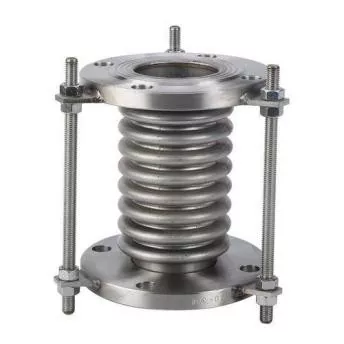
Need industrial-grade Tied Rod Metal Expansion Joint that outlasts the competition? JIDONGDA is an experienced manufacturer dedicated to extreme performance under high pressure.Unlike standard metal expansion joints that allow free movement, this structure is engineered to limit excessive displacement and maintain force equilibrium within the pipeline system, preventing over-extension, over-compression, and structural instability. Buy in bulk at unbeatable factory price points. Inquire now to upgrade your supply chain today!
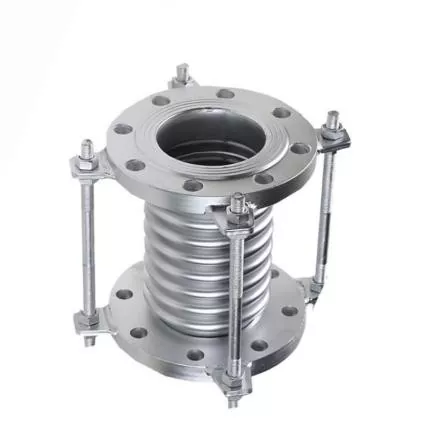
Corrugated Metal Expansion Joint
JIDONGDA is your trusted supplier for durable Corrugated Metal Expansion Joint. It bellows structure provides controlled flexibility while maintaining strong structural integrity, allowing the pipeline to absorb axial movement, lateral deflection, and angular misalignment caused by thermal expansion or mechanical stress. We deliver superior quality and precise specifications directly from our state-of-the-art factory. Request a price quote today. Don't wait—submit your RFQ now for exclusive discounts!
JIDONGDA offers premium Metal Expansion Joint manufactured under strict quality standards with reliable delivery and competitive factory pricing. Contact us for more details.