English
- English
- Español
- Português
- русский
- Français
- 日本語
- Deutsch
- tiếng Việt
- Italiano
- Nederlands
- ภาษาไทย
- Polski
- 한국어
- Svenska
- magyar
- Malay
- বাংলা ভাষার
- Dansk
- Suomi
- हिन्दी
- Pilipino
- Türkçe
- Gaeilge
- العربية
- Indonesia
- Norsk
- تمل
- český
- ελληνικά
- український
- Javanese
- فارسی
- தமிழ்
- తెలుగు
- नेपाली
- Burmese
- български
- ລາວ
- Latine
- Қазақша
- Euskal
- Azərbaycan
- Slovenský jazyk
- Македонски
- Lietuvos
- Eesti Keel
- Română
- Slovenski
- मराठी
- Srpski језик
China Durable Expansion Joint Manufacturer
An expansion joint is a specially engineered flexible connector installed in piping systems, ductwork, and structural assemblies to safely absorb thermal growth, mechanical vibration, and misalignment. Without a properly selected expansion joint, temperature fluctuations and pressure surges can cause pipe stress, leakage, equipment damage, and even catastrophic failure. The reliability of an entire system often depends on this single, seemingly modest component.
JIDONGDA has spent decades refining the art and science behind expansion joint manufacturing, combining advanced polymer and metal technologies with rigorous quality control. The result is a comprehensive range of expansion joints that serve power plants, chemical processing facilities, HVAC networks, water treatment systems, marine engineering, and district heating schemes. In every sector, engineers trust JIDONGDA expansion joints to maintain safe, leak-free operation under some of the most demanding conditions on earth.
Choosing the Correct Expansion Joint for Your System
Selecting an expansion joint is a multi-step engineering decision. The first data points to gather are the nominal pipe size, design pressure, design temperature, and the type and magnitude of expected movement. Axial compression and extension are often the easiest to accommodate, but lateral offset and angular rotation require more complex bellows geometry. If the piping system cannot support the pressure thrust, a pressure-balanced or externally restrained joint may be necessary. JIDONGDA application engineers assist customers with free technical reviews, analyzing the complete piping layout and recommending a solution that meets safety factors, code requirements, and budget expectations.
Standards such as the Expansion Joint Manufacturers Association (EJMA) guidelines, ASME B31.3, and PED 2014/68/EU are fully integrated into JIDONGDA’s design workflow. Every joint is hydrostatically tested at 1.5 times the design pressure before shipment, and vacuum tests or helium leak tests are performed for critical service units.
Frequently Asked Questions
Q: How do I calculate the movement my expansion joint must handle?
A: Thermal expansion is calculated using the formula: ΔL = α × L × ΔT, where α is the coefficient of thermal expansion for the pipe material, L is the distance between anchors, and ΔT is the temperature change. This determines the axial movement. Lateral and angular movements depend on the support arrangement and piping geometry. JIDONGDA provides a free piping movement analysis service: you submit your isometric drawing, and our engineers calculate all required movements and recommend the optimal joint type.
Q: Can a single expansion joint absorb all types of movement?
A: A single unrestrained expansion joint absorbs axial movement only. If your system exerts lateral offset or angular rotation, you will need a universal, hinged, or gimbal design. In some cases, multiple joints in combination (e.g., two hinged joints with a tie rod assembly) can handle multi-plane movement. JIDONGDA helps determine the correct arrangement because forcing a joint beyond its design movement leads to rapid fatigue failure.
Q: What is “pressure thrust” and why does it matter?
A: Pressure thrust is the force generated by internal pressure acting on the effective area of the bellows. It must be restrained either by the piping system’s main anchors or by the expansion joint itself if it is a restrained or pressure-balanced type. If the main anchors are not designed for this force, catastrophic failure can occur. JIDONGDA always calculates pressure thrust and clearly marks it on the technical data sheet so that civil and pipe stress engineers can design the foundation and anchors accordingly.
Q: Are JIDONGDA expansion joints customized?
A: Absolutely. While the standard product range covers the majority of industrial needs, about 40% of JIDONGDA’s output is custom-engineered. These projects include extremely large duct expansion joints for flue gas desulfurization systems, high-pressure subsea joints with super duplex metallurgy, and ultra-high vacuum joints for particle accelerators. The engineering team at JIDONGDA collaborates with the customer throughout the design phase, using 3D CAD and FEA simulations to validate the concept before manufacturing begins.
How to Order a JIDONGDA Expansion Joint
Ordering is straightforward. The customer provides the nominal diameter, flange standard (ANSI, EN, JIS, etc.), design pressure and temperature, media composition, and movement requirements. JIDONGDA responds quickly with a technical proposal including drawings, a data sheet, and a commercial quotation. For critical applications, a face-to-face design review meeting can be arranged. Lead times are communicated clearly, and after delivery, JIDONGDA’s service team remains available for any commissioning assistance.
Through meticulous engineering and a relentless focus on reliability, JIDONGDA has become a name synonymous with trust in the expansion joint industry. From power and process to marine and infrastructure, the performance of JIDONGDA products supports safer, more efficient operations every day.


- View as
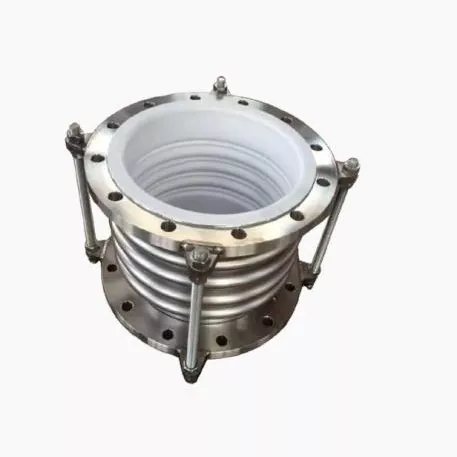
PTFE Lined Metal Expansion Joint
Eliminate middlemen and buy directly from the source! JIDONGDA is a high-capacity manufacturer providing certified PTFE Lined Metal Expansion Joint with exceptional durability. Get the best factory price today. Send your detailed specifications to us for an instant quote!
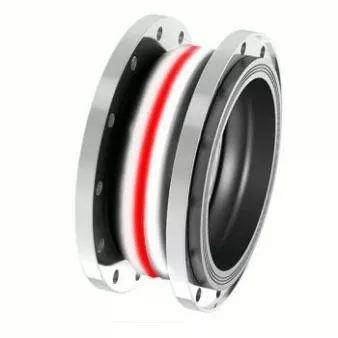
PTFE Lined Rubber Expansion Joint
Are you comparing price from different vendors? JIDONGDA is a direct factory and professional supplier of high-end PTFE Lined Rubber Expansion Joint for shipbuilding and petroleum industries. By combining a chemically inert PTFE inner liner with a flexible reinforced rubber outer structure, this product provides a balanced solution for systems that demand both corrosion resistance and movement absorption. Contact us right now to receive your customized catalog and quote!
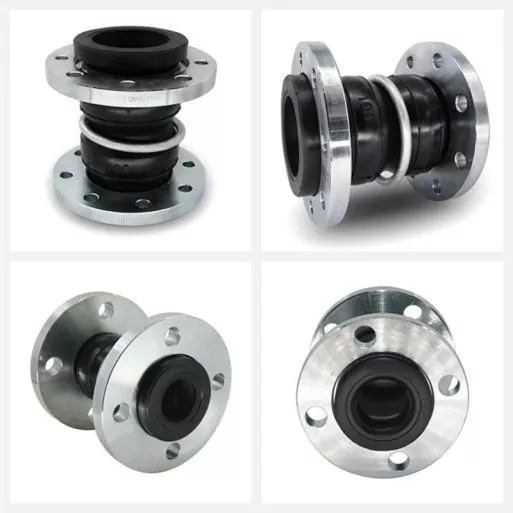
Double Sphere Composite Expansion Joint
Maximize your machine efficiency with premium Double Sphere Composite Expansion Joint engineered by JIDONGDA. Featuring a dual-sphere structure combined with composite reinforced elastomer construction, this expansion joint provides superior movement absorption, vibration isolation, and pressure stability in complex industrial pipelines. As a reputable China manufacturer, we guarantee robust quality control and competitive price advantages. Message us immediately to lock in the best factory price!
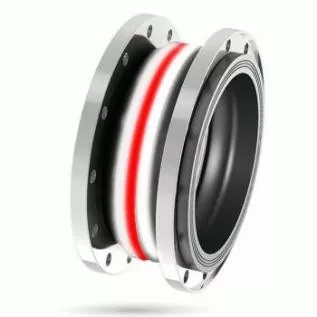
Single Sphere Composite Expansion Joint
Sourced from the famous Jing Zhou rubber base, JIDONGDA is a top-tier supplier specialized in heavy industries. Our premium Single Sphere Composite Expansion Joint guarantees reliable operations. Compared with conventional rubber expansion joints, the composite structure significantly improves mechanical strength while maintaining excellent flexibility, making it suitable for systems with continuous vibration, pressure fluctuation, and thermal movement. Buy wholesale at direct factory price. Reach out to our engineering team now for a quick reply!
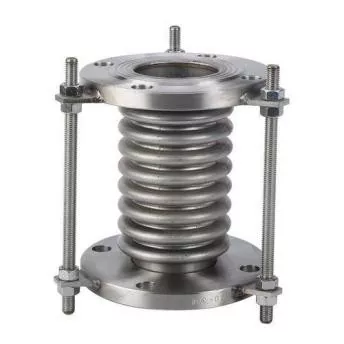
Tied Rod Metal Expansion Joint
Need industrial-grade Tied Rod Metal Expansion Joint that outlasts the competition? JIDONGDA is an experienced manufacturer dedicated to extreme performance under high pressure.Unlike standard metal expansion joints that allow free movement, this structure is engineered to limit excessive displacement and maintain force equilibrium within the pipeline system, preventing over-extension, over-compression, and structural instability. Buy in bulk at unbeatable factory price points. Inquire now to upgrade your supply chain today!
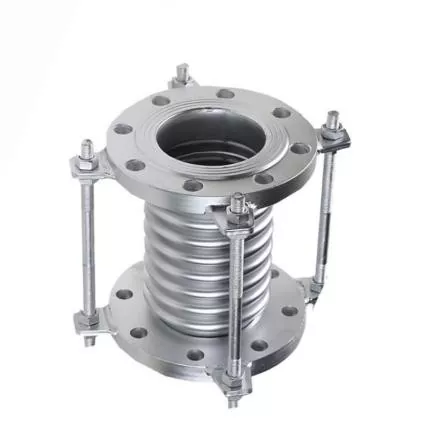
Corrugated Metal Expansion Joint
JIDONGDA is your trusted supplier for durable Corrugated Metal Expansion Joint. It bellows structure provides controlled flexibility while maintaining strong structural integrity, allowing the pipeline to absorb axial movement, lateral deflection, and angular misalignment caused by thermal expansion or mechanical stress. We deliver superior quality and precise specifications directly from our state-of-the-art factory. Request a price quote today. Don't wait—submit your RFQ now for exclusive discounts!
JIDONGDA offers premium Expansion Joint manufactured under strict quality standards with reliable delivery and competitive factory pricing. Contact us for more details.