English
- English
- Español
- Português
- русский
- Français
- 日本語
- Deutsch
- tiếng Việt
- Italiano
- Nederlands
- ภาษาไทย
- Polski
- 한국어
- Svenska
- magyar
- Malay
- বাংলা ভাষার
- Dansk
- Suomi
- हिन्दी
- Pilipino
- Türkçe
- Gaeilge
- العربية
- Indonesia
- Norsk
- تمل
- český
- ελληνικά
- український
- Javanese
- فارسی
- தமிழ்
- తెలుగు
- नेपाली
- Burmese
- български
- ລາວ
- Latine
- Қазақша
- Euskal
- Azərbaycan
- Slovenský jazyk
- Македонски
- Lietuvos
- Eesti Keel
- Română
- Slovenski
- मराठी
- Srpski језик

What Is a Ferrule Fitting and How Does It Work in Tube Connection Systems?
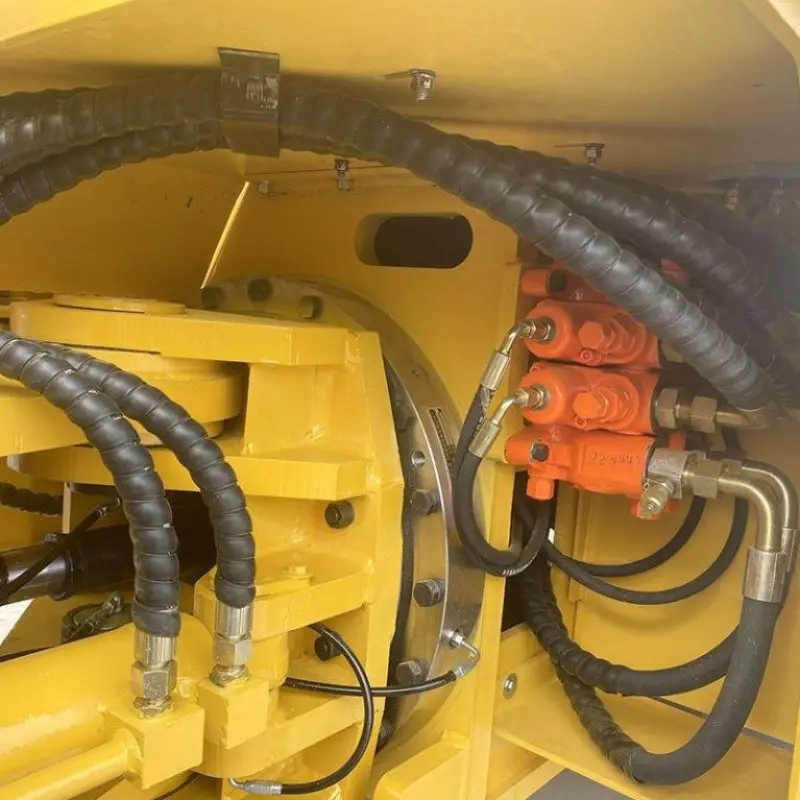
A construction excavator suddenly loses hydraulic pressure. The operator steps out and spots a puddle of oil dripping from a joint beneath the machine. The maintenance team arrives, diagnoses the problem as a loose fitting, and tightens it. But the leak returns within the hour. The problem is not the tightness; it is the Ferrule Fitting inside that has lost its grip. This scenario plays out in workshops and job sites every day, often because the people working on the equipment do not fully understand the component they are tightening. The Ferrule Fitting is one of the most common yet most misunderstood elements in fluid power systems. It is small, inexpensive, and easy to overlook, yet a properly functioning Ferrule Fitting is the difference between a reliable hydraulic system and a chronic leaker.
A Ferrule Fitting is a mechanical compression device that creates a leak-proof seal between a tube and a fitting body. It works on a simple but elegant principle: when a nut is tightened, it forces a tapered ring (the ferrule) to compress radially against the tube wall. This compression creates two critical effects: a metal-to-metal seal that prevents fluid from escaping, and a mechanical grip that prevents the tube from pulling out under pressure. The Ferrule Fitting does not rely on adhesives, sealants, or gaskets; it uses the elasticity and plasticity of metal to form a permanent, reliable connection. This article will take you on a deep dive into the world of Ferrule Fitting, exploring its anatomy, its working physics, its various types, and the technical specifications that define a quality product. We will also cover practical installation techniques and common troubleshooting scenarios. By the end, you will understand why this small component deserves much more attention than it usually receives.
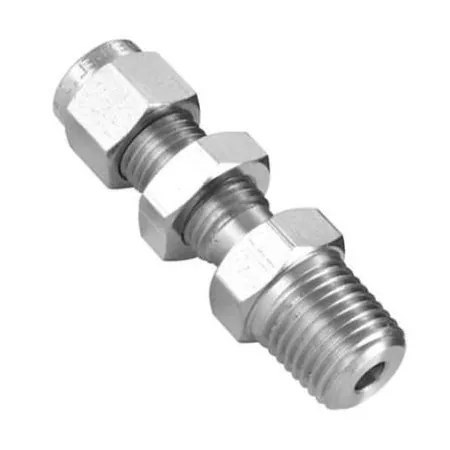
Table of Contents
- 1. What Is a Ferrule Fitting?
- 2. How Does a Ferrule Fitting Work to Create a Leak-Proof Seal?
- 3. What Are the Different Types of Ferrule Fittings and Where Are They Used?
- 4. What Technical Specifications Define a High-Quality Ferrule Fitting?
- 5. How to Properly Install and Troubleshoot a Ferrule Fitting?
- Frequently Asked Questions (FAQ)
- About the Manufacturer
- Conclusion
What Is a Ferrule Fitting?
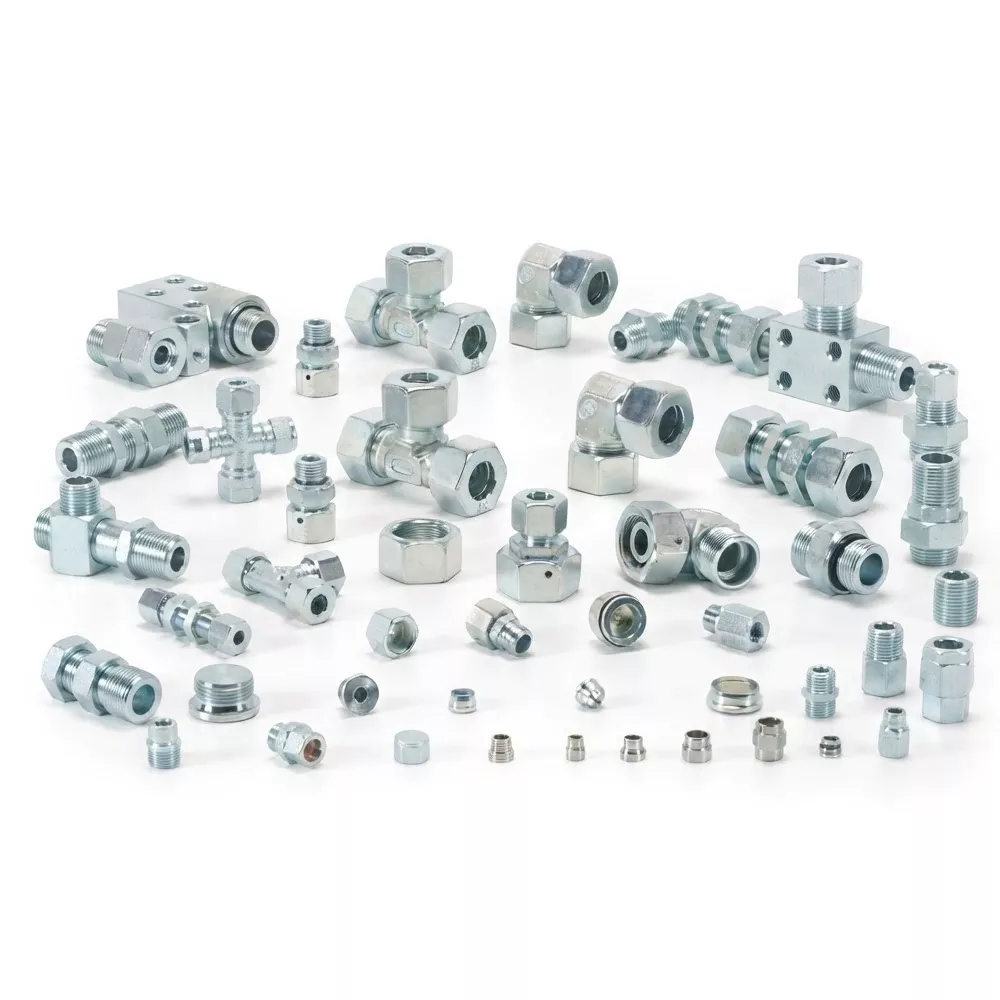
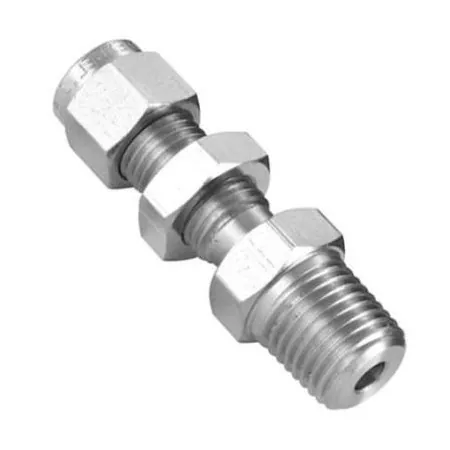
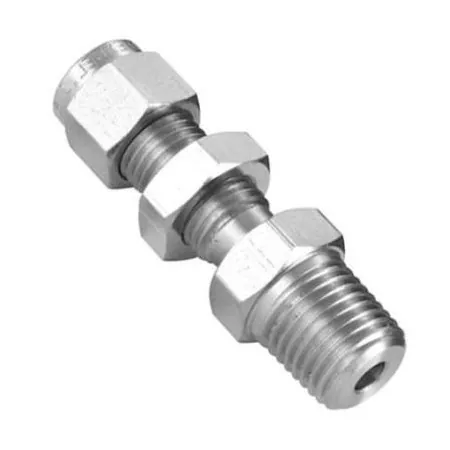
A Ferrule Fitting is a precision-engineered component used to connect a tube to a fitting body in fluid power and pneumatic systems. It is a small, ring-like metal part that, when compressed, creates a seal and provides mechanical retention. The word "ferrule" derives from the Latin "ferrum," meaning iron, reflecting its metallic nature. In its simplest form, a Ferrule Fitting is a sleeve that fits over the end of a tube. When the fitting nut is tightened, the ferrule is forced against a tapered surface in the fitting body, causing it to deform and grip the tube. This deformation is permanent; once a Ferrule Fitting has been properly compressed, it cannot be reused in a new location, and it will remain in place even under extreme vibration.
To understand the Ferrule Fitting, imagine your hand gripping a wooden stick. Your fingers wrap around the stick, applying pressure from all sides. The harder you squeeze, the tighter the grip. The Ferrule Fitting operates on the same principle, but with a crucial difference: the Ferrule Fitting is not just gripping; it is also creating a seal. The ferrule is tapered, and when it is forced into the corresponding taper inside the fitting body, it undergoes a controlled plastic deformation. The outer surface of the ferrule seals against the fitting body, while the inner surface bites into the tube wall. This dual action—sealing and gripping—is what makes the Ferrule Fitting so effective. The tube is not glued or welded; it is mechanically locked and sealed by the ferrule's deformation.
The anatomy of a Ferrule Fitting consists of three primary components:
- Fitting Body: The main housing that contains the tapered seat and provides the external connection (threaded or welded). It is typically made from stainless steel, brass, or carbon steel.
- Ferrule: The compression ring that deforms to seal and grip the tube. This is the heart of the fitting. Its geometry, material, and surface finish are critical to the fitting's performance.
- Nut: The externally threaded collar that applies the axial force to compress the ferrule into the fitting body. The nut's design affects the torque required and the ease of installation.
The Ferrule Fitting is unique among tube connection methods because it does not require any special preparation of the tube end—no flaring, brazing, or welding. The tube is simply cut square, deburred, and inserted. This simplicity is a major reason why Ferrule Fitting is so widely used in applications ranging from automotive brake lines to offshore oil platforms.
How Does a Ferrule Fitting Work to Create a Leak-Proof Seal?
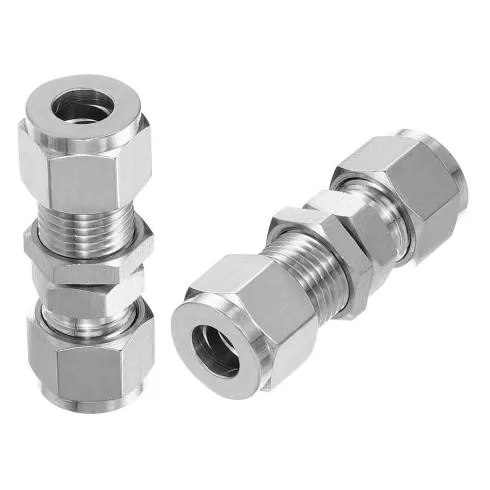
To understand how a Ferrule Fitting works, one must imagine what happens inside the fitting during tightening. It is a small drama of forces, deformations, and sealing, all happening within a space of a few millimeters. The process can be broken down into four distinct physical stages, each of which contributes to the final seal and grip.
Stage 1: Insertion and Initial Contact. The tube is cut square and deburred, then inserted into the fitting body until it bottoms out against a shoulder or is held to a specified insertion depth. The Ferrule Fitting is slid over the tube, followed by the nut. The nut is then started onto the fitting body's threads. At this point, there is no contact between the ferrule and the sealing surfaces. The ferrule is simply sitting on the tube, ready to be activated.
Stage 2: Ferrule Engagement. As the nut is tightened, it makes contact with the back face of the ferrule. The ferrule begins to move axially into the fitting body, entering the taper of the seat. The taper angle is critical: typically between 24 and 60 degrees, depending on the fitting design. The ferrule's leading edge contacts the taper of the fitting body, and the force from the nut begins to drive the ferrule forward.
Stage 3: Ferrule Deformation. At this point, the ferrule starts to deform. The ferrule's geometry is designed so that it is stronger at the back and weaker at the front. As the nut continues to tighten, the ferrule's front section, which is thinner and has a smaller cross-section, begins to collapse inward. This inward collapse is the "bite" that the Ferrule Fitting makes into the tube. The ferrule's inner diameter reduces, and its leading edge cuts into the tube wall, creating a mechanical lock. Simultaneously, the outer surface of the ferrule is being pressed against the fitting body's taper, creating the primary sealing surface.
Stage 4: Final Elastic Lock. In the final stage, the ferrule has been fully compressed. It has undergone both elastic and plastic deformation. The elastic component is crucial: the ferrule, like a spring that has been compressed, exerts a continuous outward force against the fitting body and a continuous inward force against the tube. This sustained force, known as the "sealing force," is what maintains the integrity of the connection over time, even under thermal cycling and pressure fluctuations. The tube is now locked in place and sealed.
What happens when vibration loosens the nut? If the nut backs off slightly, the ferrule's elastic recovery—its spring-like behavior—keeps the sealing surfaces in contact. This is why a properly installed Ferrule Fitting can remain leak-free even after years of service. However, if the nut is over-tightened, the ferrule can be driven past its elastic limit, resulting in excessive plastic deformation. This condition, known as "bottoming out," can destroy the ferrule and create a leak path. This is the reason why many Ferrule Fitting failures are caused by incorrect torque.
What Are the Different Types of Ferrule Fittings and Where Are They Used?
The Ferrule Fitting is not a single, monolithic product. It comes in several distinct configurations, each optimized for specific applications, pressure ranges, and environmental conditions. Understanding the differences is essential for selecting the right Ferrule Fitting for a given job. The three most common types are the Single Ferrule, the Double Ferrule, and the W-Type Ferrule.
Single Ferrule Fittings. As the name implies, the Single Ferrule uses only one ferrule element to provide both sealing and gripping functions. This ferrule is typically designed with a sharp leading edge that bites into the tube while its outer surface seals against the fitting body. Single Ferrule Fitting are simple, have fewer parts, and are often lower in cost than double ferrule designs. They are commonly used in low-to-medium pressure applications, such as pneumatic systems, instrumentation, and general industrial plumbing. The simplicity, however, comes at a cost: the single ferrule must serve two functions simultaneously, making it less tolerant of installation errors and more sensitive to tube surface finish.
Double Ferrule Fittings. The Double Ferrule Fitting is a more sophisticated design that separates the sealing and gripping functions into two independent components. The front ferrule is designed to seal against the fitting body, while the back ferrule is designed to grip the tube. This division of labor allows each ferrule to be optimized for its specific function. The front ferrule can be made with a softer material for better sealing, while the back ferrule can be harder for better grip. Double Ferrule Fitting are widely used in high-pressure hydraulic systems, such as those found in construction equipment, injection molding machines, and offshore oil rigs. They offer superior vibration resistance and are less sensitive to installation torque variations.
W-Type Ferrule Fittings. The W-Type Ferrule is a specialized design, typically made from a high-grade stainless steel alloy, with a distinctive "W" profile in cross-section. This unique shape allows the ferrule to absorb thermal expansion and contraction without losing its preload. W-Type Ferrule Fitting are primarily used in high-temperature applications, such as steam tracing, heat exchangers, and furnace piping. They are also found in cryogenic systems where extreme temperature variations are common. The W-Type design provides a more uniform stress distribution, reducing the risk of stress corrosion cracking in demanding environments.
The table below provides a comparative overview of the three main Ferrule Fitting types.
| Feature | Single Ferrule | Double Ferrule | W-Type Ferrule |
| Number of Ferrules | 1 | 2 (front and back) | 1 (special profile) |
| Sealing & Gripping | Combined in one part | Separated functions | Combined with thermal compensation |
| Typical Pressure Range | Up to 350 bar | Up to 630 bar | Up to 400 bar |
| Typical Temperature Range | -40°C to +200°C | -40°C to +260°C | -200°C to +540°C |
| Common Applications | Pneumatics, instrumentation | Hydraulic systems, oil and gas | High-temperature piping, steam |
| Reusability | Limited | Limited (front ferrule non-reusable) | Limited |
What Technical Specifications Define a High-Quality Ferrule Fitting?
The performance of a Ferrule Fitting is determined by a combination of material selection, geometric precision, and surface treatment. A poorly manufactured ferrule will fail prematurely, while a high-quality ferrule can provide decades of reliable service. Understanding the technical specifications that define a high-quality Ferrule Fitting is essential for engineers, procurement professionals, and maintenance teams who must select the right component for their application.
At our factory, we manufacture Ferrule Fitting that meet the highest industry standards. Our Ferrule Fitting products are available in various materials, including 316L stainless steel, brass, and carbon steel, with surface treatments ranging from passivation to electroless nickel plating. The table below provides a detailed breakdown of the key technical specifications for our Ferrule Fitting range.
| Specification | Value / Description |
| Material Options | 316L Stainless Steel, Brass (CuZn39Pb3), Carbon Steel (AISI 1045) |
| Surface Hardness (HRC) | 58-62 HRC (after heat treatment) |
| Surface Roughness (Ra) | 0.4-0.8 µm (polished sealing surfaces) |
| Sealing Angle | 24° (conical), 60° (for some special types) |
| Tube Diameter Range | 4mm to 42mm (1/8" to 1-1/2") |
| Working Pressure Range | Up to 630 bar (for double ferrule designs) |
| Operating Temperature | -60°C to +400°C (depending on material) |
| Heat Treatment | Vacuum carburizing + quenching + tempering |
| Surface Finish | Passivation (stainless), electroless nickel plating (carbon steel) |
| Torque Tolerance | +/- 5% of specified value |
One of the most critical parameters is the surface hardness of the ferrule. The ferrule must be harder than the tube it is gripping, but not so hard that it becomes brittle. Our Ferrule Fitting is heat-treated to achieve a surface hardness of 58-62 HRC, which provides the optimal balance between bite and toughness. The surface roughness of the sealing surfaces is also critical. A surface that is too rough will not seal properly, while a surface that is too smooth may not provide enough friction for the ferrule to "bite" the tube. We maintain a surface roughness of 0.4-0.8 µm on our sealing surfaces, which has proven to be the optimal range for sealing.
In addition to these standard specifications, we offer several customized options for Ferrule Fitting, including special materials (e.g., Inconel, Monel for corrosive environments) and special coatings (e.g., PTFE coating for reduced friction). Our engineering team is available to assist in the selection of the right Ferrule Fitting specifications for your specific application.
How to Properly Install and Troubleshoot a Ferrule Fitting?
Even the highest-quality Ferrule Fitting will fail if it is not installed correctly. Proper installation is a skill that every maintenance technician and engineer should master. The process is straightforward but requires attention to detail at each step. The table below outlines the five essential steps for installing a Ferrule Fitting correctly.
| Step | Action | Key Considerations |
| 1. Tube Preparation | Cut the tube to length using a tube cutter, ensuring a square end. | Remove all burrs and internal debris. The tube must be perfectly square. |
| 2. Insertion | Slide the ferrule and nut onto the tube, then insert the tube into the fitting body until it stops. | The tube must be fully bottomed against the shoulder. |
| 3. Pre-Tightening | Hand-tighten the nut, then use a wrench to turn it an additional 1/4 to 1/2 turn. | The resistance should increase smoothly; if it is stiff, check for tube misalignment. |
| 4. Final Tightening | Tighten the nut to the specified torque using a torque wrench. | Use the manufacturer's torque chart for exact values. |
| 5. Inspection | Check for any visible signs of damage or misalignment. | If the ferrule is visibly deformed or cracked, it must be replaced. |
Despite careful installation, leaks and other problems can arise. When troubleshooting a Ferrule Fitting, it is helpful to follow a systematic process. Below is a simplified troubleshooting guide.
- Leak detected during initial installation: Check the tube squareness and the depth of insertion. A poorly cut tube or incomplete insertion is the most common cause of initial leaks. Re-install with a new Ferrule Fitting.
- Leak detected after a period of operation: Check the nut torque. Vibration can cause the nut to back off. Retightening the nut may solve the problem. If the leak persists, inspect the ferrule for damage. A ferrule may have been over-tightened during the first installation, causing excessive deformation.
- Tube can be rotated or pulled out: The ferrule has not sufficiently gripped the tube. This is usually due to insufficient tightening or the use of a tube with incorrect hardness. Check the torque and verify that the tube material is compatible with the Ferrule Fitting specifications.
- Ferrule is visibly cracked or broken: This is often due to over-tightening or a material defect. Replace the Ferrule Fitting with a new unit and check the torque to ensure it does not exceed the recommended value.
Frequently Asked Questions (FAQ)
Question 1: Can a Ferrule Fitting be reused after it has been tightened?
Answer: Generally, a Ferrule Fitting is not designed to be reused. The ferrule undergoes permanent plastic deformation when it is compressed, and the bite it makes into the tube is a one-time event. Reusing a ferrule on a new tube or at a new location is not recommended, as it will not form the same reliable seal and grip. In some cases, if the fitting has only been slightly tightened (and the ferrule has not yet bitten the tube), it may be possible to reposition it, but this is at the installer's risk. Our factory recommends replacing the ferrule and nut whenever the tube connection is disassembled, to guarantee a leak-proof seal.
Question 2: How can I tell if a Ferrule Fitting is tight enough without a torque wrench?
Answer: While a torque wrench is the preferred tool for consistent and accurate tightening, it is not always available. An alternative method is the "turn count" method. Once the nut is hand-tight, mark a reference point and then tighten it an additional 1/4 to 1/2 turn, depending on the size and material of the fitting. For a 1/4" tube fitting, a 1/4 turn after hand-tightening is often sufficient; for a 1/2" fitting, it may be 1/2 turn. However, this method is less precise and relies on the feel of the installer. We strongly advise using a torque wrench and the manufacturer's specified torque values, especially in high-pressure or safety-critical applications.
Question 3: Are Ferrule Fittings suitable for stainless steel tubes?
Answer: Yes, Ferrule Fitting is widely used with stainless steel tubes. However, the tube material must be compatible with the ferrule material. The ferrule must be harder than the tube to create the necessary bite. For stainless steel tubes, we recommend using a ferrule made from a stainless steel alloy with a higher hardness than the tube. Our factory offers Ferrule Fitting that are specifically designed for use with stainless steel tubing, with an optimized heat treatment to ensure a secure grip and reliable seal. If there is a significant hardness mismatch, the ferrule may not grip the tube properly, or the tube may be damaged.
Question 4: What is the highest pressure a Ferrule Fitting can handle?
Answer: The maximum working pressure of a Ferrule Fitting depends on several factors: the tube diameter, the material of the ferrule and the fitting body, and the design type (single ferrule vs. double ferrule). Our double ferrule Ferrule Fitting for tubes up to 1" diameter are rated for working pressures up to 630 bar (9,100 psi). For larger diameters or higher pressures, special designs are available. Always refer to the manufacturer's pressure rating chart for the specific model and size. It is essential to ensure that the Ferrule Fitting rating exceeds the maximum system pressure plus a safety margin.
Question 5: Why does my Ferrule Fitting leak even after I tightened it correctly?
Answer: A leak in a correctly tightened Ferrule Fitting can be caused by several factors that may not be immediately obvious. The most common causes are: a scratched or damaged tube surface under the ferrule (often from debris or handling); a tube that is not perfectly round (especially if it was cut with a hacksaw rather than a tube cutter); an incorrect tube hardness (the ferrule cannot bite into a tube that is too hard); or a damaged or contaminated sealing surface in the fitting body itself. Additionally, if the fitting has been disassembled and reassembled without replacing the ferrule, the original deformation will not be repeated, causing a leak. Our factory recommends that you inspect the tube carefully for damage and always use new Ferrule Fitting when reinstalling connections to avoid leaks.
About the Manufacturer
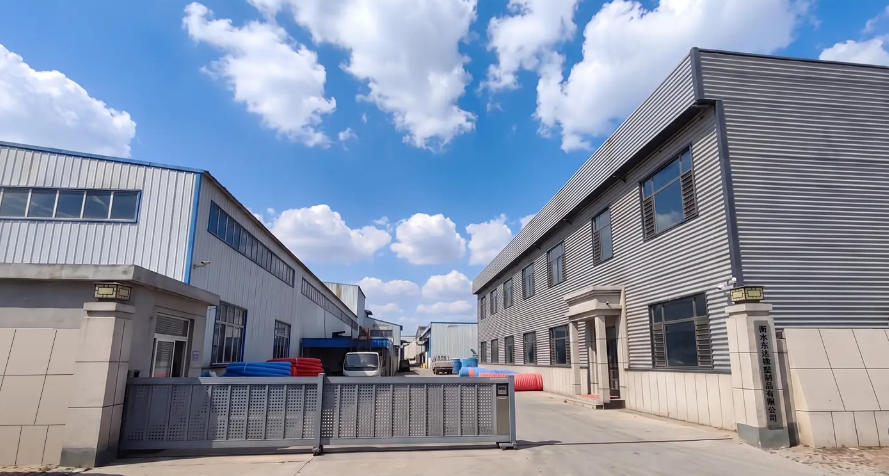
Hengshui Dongda Rubber & Plastic Products Co., Ltd. is located in Jing County, Hebei Province—the heart of China's renowned rubber and plastic industry base, approved by the China Rubber Industry Association in 2007. With convenient transportation access via the Beijing-Fuzhou Expressway and national highways, the company has grown into a professional manufacturer of high and low pressure hose assemblies, conveyor belts, hydraulic cylinders, metal hoses, nylon gaskets, rollers, and various rubber and plastic products.
Our Ferrule Fitting products are engineered for high pressure resistance, small bending radius, strong anti-fatigue performance, and extended service life. They are widely applied in engineering machinery, petroleum, coal mining, electric power, metallurgy, chemical industry, shipbuilding, and transportation sectors, earning high recognition from customers both domestically and internationally.
We sincerely welcome valuable feedback and support from friends and clients worldwide. Users at home and abroad are invited to inquire and discuss cooperation. We are committed to providing satisfactory service and reliable solutions for all your connection needs.
Conclusion
The Ferrule Fitting may be a small component, but its role in the integrity and reliability of fluid power systems is enormous. From the way it deforms to create a seal and grip, to the choice of material and heat treatment that defines its performance, the Ferrule Fitting is a masterpiece of engineering that often goes unnoticed until it fails. Understanding how it works, what types are available, and how to install it correctly is essential for anyone who works with tube connection systems.
At JIDONGDA, we are committed to providing high-quality Ferrule Fitting that meet the demanding requirements of modern industry. Our products are designed and manufactured to the highest standards, ensuring reliable performance in the most challenging conditions. If you are looking for a dependable Ferrule Fitting solution for your application, we invite you to contact us. Our team of experienced professionals is ready to assist you with product selection, technical support, and customized solutions. Contact Hengshui Dongda Rubber & Plastic Products Co., Ltd. today for a consultation or to request a quote. Let us help you build a connection you can trust.
Related News
- Why Should You Choose a Stainless Steel 316L Ferrule for Reliable, Corrosion-Resistant Piping Connections
- How Can a Large Diameter Flexible Flanged Rubber Hose Improve Heavy-Duty Pipeline Connections
- How Can a Double Sphere Rubber Expansion Joint Improve Pipeline Flexibility and Vibration Control
- How Can a Corrugated Metal Expansion Joint Improve the Reliability of High-Temperature Piping Systems
- Why Is Fillet Weld Fitting an Essential Choice for Reliable Industrial Piping Connections
- How Can a Fillet Weld Fitting Improve the Strength, Stability, and Reliability of Industrial Piping Systems
Leave me a message