English
- English
- Español
- Português
- русский
- Français
- 日本語
- Deutsch
- tiếng Việt
- Italiano
- Nederlands
- ภาษาไทย
- Polski
- 한국어
- Svenska
- magyar
- Malay
- বাংলা ভাষার
- Dansk
- Suomi
- हिन्दी
- Pilipino
- Türkçe
- Gaeilge
- العربية
- Indonesia
- Norsk
- تمل
- český
- ελληνικά
- український
- Javanese
- فارسی
- தமிழ்
- తెలుగు
- नेपाली
- Burmese
- български
- ລາວ
- Latine
- Қазақша
- Euskal
- Azərbaycan
- Slovenský jazyk
- Македонски
- Lietuvos
- Eesti Keel
- Română
- Slovenski
- मराठी
- Srpski језик
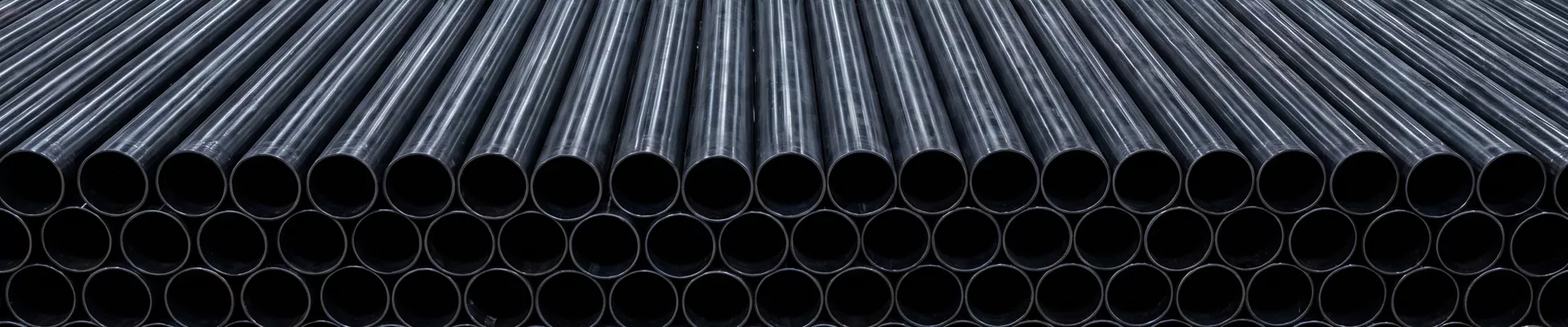
China PTFE Expansion Joint Supplier
Polytetrafluoroethylene expansion joints represent a critical advancement in industrial piping and ductwork systems where chemical resistance, thermal stability, and flexibility converge. A PTFE Expansion Joint absorbs thermal expansion, isolates vibration, compensates for misalignment, and reduces noise transmission in pipelines carrying highly corrosive media. Industries ranging from chemical processing to pharmaceutical manufacturing depend on these components to maintain system integrity under extreme operating conditions. JIDONGDA has dedicated extensive research and engineering resources to developing PTFE Expansion Joint solutions that meet the rigorous demands of modern industrial applications, combining precision manufacturing with advanced polymer technology.
Frequently Asked Questions
What is the typical lead time for custom PTFE Expansion Joint orders?
JIDONGDA maintains an extensive inventory of PTFE bellows blanks in standard diameters and convolution counts, which enables rapid assembly of PTFE Expansion Joint units for common specifications within 5 to 15 business days. Custom configurations requiring non-standard diameters, specialty flange materials, or unique convolution geometries typically require 3 to 6 weeks for manufacturing. Large diameter units above DN600 or those requiring complex multi-arch designs may extend to 8 weeks. Rush manufacturing services are available for critical plant shutdowns and emergency replacements, with expedited production possible within 48 to 72 hours for certain standard configurations. Each PTFE Expansion Joint order includes material certifications, dimensional inspection reports, and hydrostatic test certificates as standard documentation.
How long does a PTFE Expansion Joint last in continuous chemical service?
Service life of a PTFE Expansion Joint depends on the combined effects of temperature, pressure, movement magnitude, movement frequency, and chemical exposure. In properly specified installations operating within design parameters, service lives of 3 to 10 years are commonly achieved. The primary life-limiting factors include cyclic fatigue of the PTFE bellows material, creep deformation under sustained pressure at elevated temperatures, and chemical attack from unusual aggressive species such as sodium metal or fluorine gas. JIDONGDA recommends periodic visual inspection at 6-month intervals to monitor for signs of creep, distortion, or chemical attack. Replacement intervals should be scheduled based on observed condition trends rather than arbitrary time periods. Units operating at ambient temperature with moderate movement cycles routinely exceed 8 years of continuous service without degradation.
What testing and certification accompanies a JIDONGDA PTFE Expansion Joint?
Each PTFE Expansion Joint manufactured by JIDONGDA undergoes a comprehensive quality assurance program. Hydrostatic pressure testing at 1.5 times the rated design pressure confirms structural integrity and leak-tightness of the bellows and flange connections. Dimensional inspection verifies face-to-face length, flange parallelism, bolt hole orientation, and convolution geometry against manufacturing drawings. Material certification documents trace the PTFE resin to its original production lot, providing complete chemical and physical property verification. Additional testing available upon request includes helium leak detection for high-vacuum applications, dye penetrant inspection of flange welds, positive material identification of metallic components, and cycle life testing to validate fatigue performance. Documentation packages comply with EN 10204 3.1 certification requirements as standard, with 3.2 third-party inspection certification available through arrangements with recognized inspection agencies.
How should a PTFE Expansion Joint be stored prior to installation?
Proper storage of a PTFE Expansion Joint preserves its mechanical integrity and prevents premature aging before installation. The joint should be stored indoors in a clean, dry environment away from direct sunlight, as ultraviolet radiation can degrade unprotected PTFE surfaces over extended periods. Storage temperatures should remain between 5°C and 35°C to prevent thermal cycling stress on the bellows. The PTFE Expansion Joint must be supported along its full length to prevent sagging or distortion, with the bellows section protected from mechanical damage by the original shipping packaging or equivalent cover. Flange faces should remain protected with their factory-installed covers to prevent scratching or contamination of sealing surfaces. Storage near ozone-generating equipment such as large electric motors or welding machines should be avoided. Units stored for more than 12 months should undergo visual inspection and dimensional verification before installation to confirm that no relaxation or deformation has occurred.


- View as
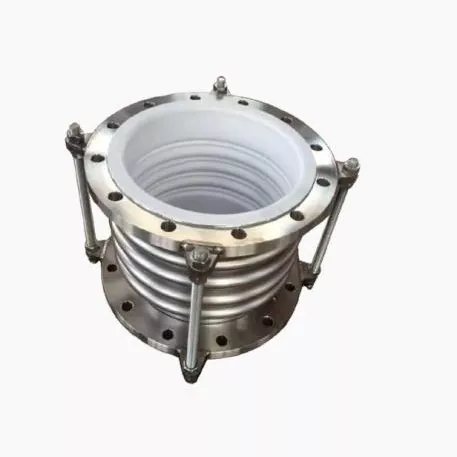
PTFE Lined Metal Expansion Joint
Eliminate middlemen and buy directly from the source! JIDONGDA is a high-capacity manufacturer providing certified PTFE Lined Metal Expansion Joint with exceptional durability. Get the best factory price today. Send your detailed specifications to us for an instant quote!
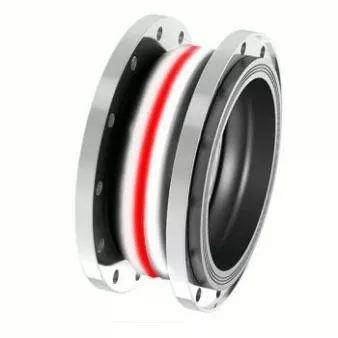
PTFE Lined Rubber Expansion Joint
Are you comparing price from different vendors? JIDONGDA is a direct factory and professional supplier of high-end PTFE Lined Rubber Expansion Joint for shipbuilding and petroleum industries. By combining a chemically inert PTFE inner liner with a flexible reinforced rubber outer structure, this product provides a balanced solution for systems that demand both corrosion resistance and movement absorption. Contact us right now to receive your customized catalog and quote!
JIDONGDA offers premium PTFE Expansion Joint manufactured under strict quality standards with reliable delivery and competitive factory pricing. Contact us for more details.