English
- English
- Español
- Português
- русский
- Français
- 日本語
- Deutsch
- tiếng Việt
- Italiano
- Nederlands
- ภาษาไทย
- Polski
- 한국어
- Svenska
- magyar
- Malay
- বাংলা ভাষার
- Dansk
- Suomi
- हिन्दी
- Pilipino
- Türkçe
- Gaeilge
- العربية
- Indonesia
- Norsk
- تمل
- český
- ελληνικά
- український
- Javanese
- فارسی
- தமிழ்
- తెలుగు
- नेपाली
- Burmese
- български
- ລາວ
- Latine
- Қазақша
- Euskal
- Azərbaycan
- Slovenský jazyk
- Македонски
- Lietuvos
- Eesti Keel
- Română
- Slovenski
- मराठी
- Srpski језик
China Customized Threaded Fitting factory
Anyone who has worked with piping systems—from small-scale residential plumbing to sprawling industrial complexes—understands that connections are the weakest link in any network. A single failure can lead to leaks, downtime, and safety hazards. This is where the threaded fitting comes into its own. By enabling robust, detachable joints without the need for hot work, threaded fittings have become indispensable across oil and gas, chemical processing, water treatment, and HVAC industries. Their true value, however, lies in the precise engineering of their parameters. An informed selection process demands a thorough grasp of dimensions, pressure ratings, material science, and thread standards. Below, we break down every critical specification, share expert installation insights, and answer the most pressing questions field engineers ask.
Frequently Asked Questions
What is a threaded fitting and how does it work?
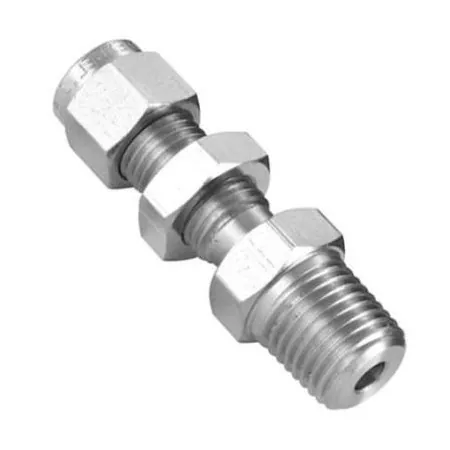
It is a forged or machined pipe connector that uses helical grooves on its interior and/or exterior surfaces to mate with corresponding threads on a pipe or another fitting. When the fitting is tightened, the tapered male thread wedges into the female thread, creating mechanical engagement and, with the aid of a sealant, a pressure-tight seal. The wedge action generates radial and compressive forces that lock the components together. This design allows for easy assembly and disassembly, making it ideal for systems requiring maintenance or modification. Unlike welded joints, threaded connections do not require heat or special operator certification, which simplifies field installation. However, they are generally limited to pipe diameters below 4 inches because the torque required for larger sizes becomes impractical, and the thread engagement can be less reliable under high vibration.
What are the most common materials used for threaded fittings?
The selection of material for a threaded fitting hinges on the service fluid, temperature, and pressure. Carbon steel to ASTM A105 is the workhorse for non-corrosive applications up to 800°F. For corrosive environments, austenitic stainless steels such as 304 and 316 are standard; 316L is preferred in the presence of chlorides to avoid pitting. Low-temperature carbon steel ASTM A350 LF2 is specified when systems operate at cryogenic temperatures down to -50°F, as it retains impact toughness. Alloy steels like ASTM A182 F11 and F22, containing chromium and molybdenum, are chosen for high-temperature, high-pressure steam lines in refineries, where creep resistance matters. Brass and copper-nickel alloys serve in marine and potable water systems due to their biocidal properties and corrosion resistance. Duplex stainless steels tackle aggressive sour gas environments where both chloride stress corrosion cracking and hydrogen embrittlement are risks.
How do I choose the correct pressure class for my threaded fitting?
Selecting the appropriate pressure class first requires determining the design pressure and design temperature of your piping system. Each class—2000, 3000, 6000—corresponds to a maximum allowable working pressure at a reference temperature, typically room temperature. As temperature rises, the material’s strength decays, and the pressure rating must be derated according to code tables in ASME B16.11. For example, a Class 3000 carbon steel threaded fitting is rated for 3000 psi at 100°F but may only handle 2570 psi at 400°F. Always cross-reference the temperature derating factor for the specific material grade. Additionally, consider the pipe schedule: Class 2000 fittings are used with Sch 80 pipe, Class 3000 with Sch 160, and Class 6000 with XXS pipe. Mismatching the fitting class and pipe schedule can result in a weak link at the thread root. When in doubt, consult the manufacturer—JIDONGDA application engineers provide pressure-temperature rating tables for each material variant.
What thread standards apply ?
The most prevalent thread standards are National Pipe Taper (NPT) governed by ASME B1.20.1, and British Standard Pipe Taper (BSPT) per ISO 7/1. NPT threads have a 60° flank angle and a taper of 0.75 inch per foot (1 in 16). They are the default standard in the United States, Canada, and many oil and gas regions worldwide. BSPT, with a 55° flank angle, is widely used in Europe, the Middle East, and Commonwealth countries. A less common but important variant is NPTF (Dryseal), which uses crest and root interference for a leak-tight seal without sealant, ideal for hydraulic systems. Parallel threads, such as BSPP (ISO 228/1), are not self-sealing and require a bonded washer or O-ring for sealing; they are often found on fittings that assemble face-to-face. Mismatching thread types will cause galling, incomplete engagement, and leaks. Always verify the thread form using a thread pitch gauge before installation. JIDONGDA markings on each fitting body include the thread designation for easy identification.
How do I properly install and seal ?
Proper installation starts with thorough thread inspection. Remove any protective caps and visually check for burrs or deformation. Clean both male and female threads with a degreaser if oil is present. Apply a thread sealant appropriate for the service: PTFE tape (wrapped 2–3 layers in the direction of the thread) for water and low-pressure steam, or a PTFE-based paste for higher pressures and gases. Avoid over-applying tape, as excess can shred and enter the process stream. Thread the fitting by hand several turns to ensure alignment, then use a wrench to tighten. The number of wrench turns past hand-tight varies; for 1/2″ to 2″ NPT, 2–3 full turns is typical. Use a backup wrench to prevent torque transmission into the pipe. After assembly, hydrostatically test the system. If a leak is detected, never tighten a fitting under pressure—depressurize, disassemble, clean, and re-apply sealant. For stainless steel fittings, use a nickel-based anti-seize compound on threads to prevent galling. Following these steps eliminates the root causes of most joint failures: cross-threading, insufficient tightening, and incorrect sealant choice.
Code Compliance and Quality Assurance
Threaded fittings must comply with a matrix of international standards. ASME B16.11 covers forged steel fittings from 1/4″ to 4″, specifying dimensions, tolerances, and marking. ANSI/ASME B1.20.1 defines NPT thread dimensions and gaging. For materials, ASTM specifications dictate chemical and mechanical properties. In the European Union, PED 2014/68/EU applies to pressure equipment, requiring CE marking.
This commitment to code compliance means that a JIDONGDA threaded fitting is not just a commodity component—it is a certified pressure-retaining part with full traceability from mill to installation site.


- View as
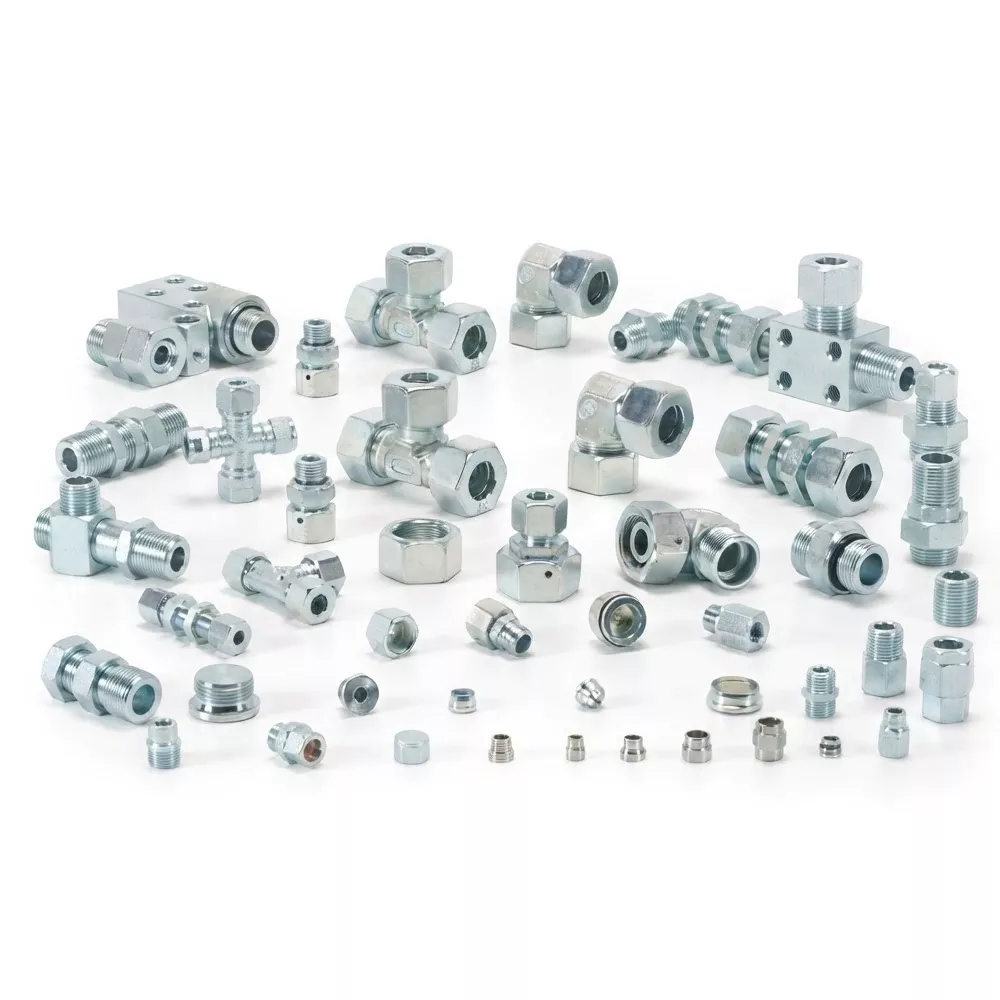
Hydraulic Threaded Fitting
Experience the power of professional manufacturing. JIDONGDA is an expert manufacturer providing elite-grade Hydraulic Threaded Fitting with long service lives. Buy at transparent, competitive factory price. Click to contact us and get a customized solution now!
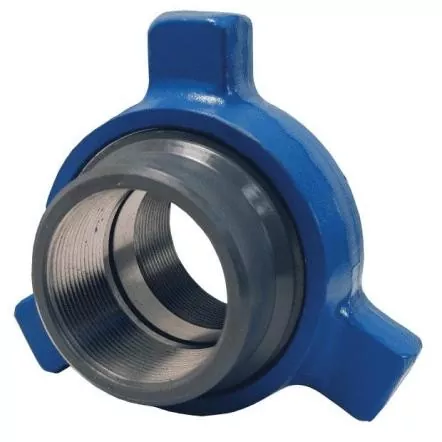
Hammer Union
Secure your industrial supply with JIDONGDA—a certified factory and leading global supplier. Our durable Hammer Union is widely trusted in chemical and metallurgy fields. Buy at rock-bottom price. Send your inquiry today to get a fast-track response!
JIDONGDA offers premium Threaded Fitting manufactured under strict quality standards with reliable delivery and competitive factory pricing. Contact us for more details.