English
- English
- Español
- Português
- русский
- Français
- 日本語
- Deutsch
- tiếng Việt
- Italiano
- Nederlands
- ภาษาไทย
- Polski
- 한국어
- Svenska
- magyar
- Malay
- বাংলা ভাষার
- Dansk
- Suomi
- हिन्दी
- Pilipino
- Türkçe
- Gaeilge
- العربية
- Indonesia
- Norsk
- تمل
- český
- ελληνικά
- український
- Javanese
- فارسی
- தமிழ்
- తెలుగు
- नेपाली
- Burmese
- български
- ລາວ
- Latine
- Қазақша
- Euskal
- Azərbaycan
- Slovenský jazyk
- Македонски
- Lietuvos
- Eesti Keel
- Română
- Slovenski
- मराठी
- Srpski језик

How Can a Large Diameter Heavy-Duty Flanged Rubber Hose Improve Reliability in Demanding Industrial Applications
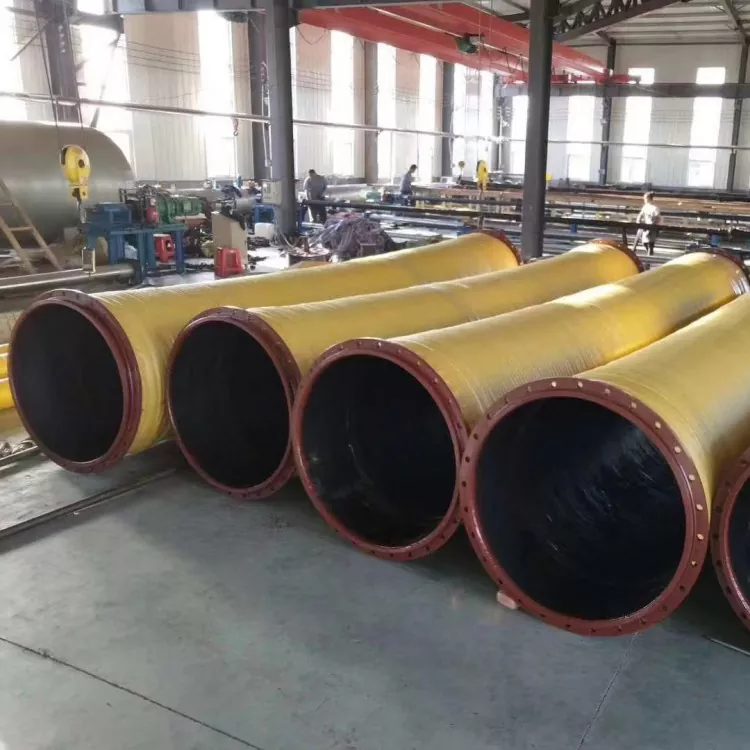
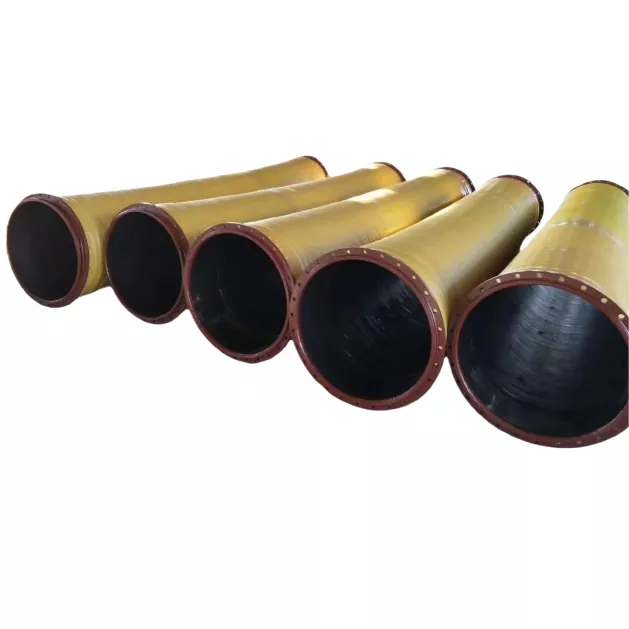
JIDONGDA provides the Large Diameter Heavy-Duty Flanged Rubber Hose for demanding industrial conveying applications, including mining, sand and gravel handling, tailings transportation, and heavy equipment systems. With a reinforced structure, wear-resistant rubber options, and configurable flange connections, it helps engineers build fluid and slurry transfer systems suited to challenging operating conditions.
A large-bore hose must do more than move material from one point to another. In heavy-duty operations, abrasive particles, fluctuating pressure, vibration, and mechanical loads can accelerate wear and increase maintenance requirements. Choosing the right Large Diameter Heavy-Duty Flanged Rubber Hose requires evaluating the conveyed medium, inner diameter, reinforcement structure, working pressure, vacuum requirements, temperature, and flange dimensions together. This guide explains how these hoses work, where they are used, how to select suitable specifications, and which maintenance practices help support dependable operation. It also outlines the technical details buyers should confirm with a manufacturer before placing an order.
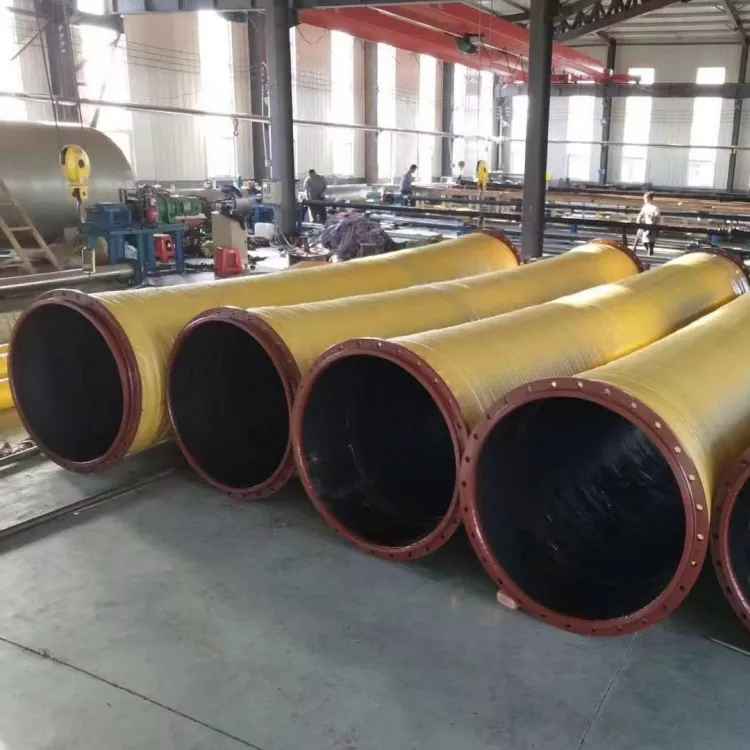
Table of Contents
- Why Do Heavy-Duty Industrial Systems Need Specialized Rubber Hoses?
- How Is a Heavy-Duty Flanged Rubber Hose Constructed?
- What Are the Main Benefits of a Large-Diameter Flanged Hose?
- Which Industries Use Heavy-Duty Flanged Rubber Hoses?
- How Do You Select the Right Hose Specifications?
- How Do Key Selection Factors Compare?
- How Can Installation and Maintenance Improve Service Life?
- Frequently Asked Questions
- How Can You Find a Suitable Hose Solution?
Why Do Heavy-Duty Industrial Systems Need Specialized Rubber Hoses?
Industrial conveying systems often operate under conditions that quickly expose the limitations of ordinary hoses. When a pipeline transports mineral slurry, sand, gravel, or tailings, solid particles repeatedly contact the inner wall. Over time, this abrasion can reduce wall thickness, weaken the hose structure, and increase the risk of leakage.
Other challenges include pressure fluctuations, equipment vibration, restricted installation space, and movement between connected components. In suction applications, negative pressure introduces another important consideration: the hose must have an appropriate structure to resist collapse under the specified vacuum conditions.
A Large Diameter Heavy-Duty Flanged Rubber Hose addresses these challenges through application-specific material selection, reinforcement, and end connections. Its large bore can accommodate high-volume material transfer, while the flange arrangement provides a defined interface with compatible piping and equipment.
However, a heavy-duty designation does not automatically mean that every hose can withstand every pressure, temperature, or abrasive medium. Correct engineering selection is essential for safe and reliable performance.
How Is a Heavy-Duty Flanged Rubber Hose Constructed?
Hose performance depends on the interaction of several structural components. Each layer performs a different function, and the final configuration should reflect the actual operating environment.
1. Inner Rubber Layer
The inner tube directly contacts the transported medium. For abrasive materials such as sand, mineral slurry, and tailings, the rubber compound should be selected according to particle size, concentration, flow characteristics, and expected wear severity.
Material compatibility also matters. A compound suitable for water may not be appropriate for oil, aggressive chemicals, or high-temperature service. Buyers should confirm the recommended lining material with the manufacturer rather than assume that one rubber formulation suits every application.
2. Reinforcement Layer
Reinforcement provides the structural strength needed to withstand the specified operating conditions. Depending on the application, the construction may incorporate multiple layers of cord fabric or other reinforcement materials.
Where suction or negative pressure is involved, spiral steel wire or another suitable supporting structure may be required. The reinforcement design should be matched to working pressure, vacuum pressure, hose length, bending conditions, and mechanical loads.
3. Outer Rubber Cover
The outer cover helps protect the reinforcement from environmental exposure, surface abrasion, and mechanical damage. Its formulation should reflect installation conditions, including contact with surrounding equipment, exposure to weather, and potential contact with oils or other substances.
4. Flange Connections
Flanges create the mechanical connection between the hose and the adjoining pipeline or equipment. Their dimensions, materials, bolt-hole arrangements, and sealing surfaces must match the mating interface.
Depending on project requirements, flange configurations can be specified according to GB, DIN, ANSI, JIS, ASME, or customer drawings, subject to technical confirmation. Correct alignment and compatible sealing components are essential for reducing leakage and avoiding unnecessary stress on the connection.
What Are the Main Benefits of a Large-Diameter Flanged Hose?
When correctly specified, a heavy-duty rubber hose can offer several practical advantages for industrial conveying systems.
- High-volume conveying: A large internal diameter supports the movement of substantial quantities of liquid or suitable solid-liquid mixtures.
- Application-specific abrasion resistance: An appropriately selected inner rubber compound helps manage wear caused by abrasive particles.
- Reinforced construction: A suitable reinforcement design supports the required pressure and mechanical operating conditions.
- Flexible pipeline connection: Rubber construction can accommodate certain installation movements and vibration when the hose is correctly designed and installed.
- Configurable flange interfaces: Connection dimensions and flange arrangements can be specified to match compatible equipment.
- Project-based customization: Diameter, length, pressure requirements, materials, and connection details can be reviewed according to individual project needs.
These benefits depend on proper engineering, manufacturing quality, and installation. A hose that is incorrectly sized or operated outside its rated conditions may experience premature failure even if its general construction is intended for heavy-duty service.
Which Industries Use Heavy-Duty Flanged Rubber Hoses?
The combination of a large bore, reinforced construction, and configurable connections makes this hose category useful in several industrial sectors.
Mining and Mineral Processing
Mining operations may use large-bore hoses to transfer mineral slurry, ore slurry, and other abrasive mixtures. Selecting the lining requires attention to particle characteristics, concentration, flow rate, and wear severity.
Sand, Gravel, and Tailings Handling
Sand and gravel operations often move mixtures containing hard particles that can cause substantial internal abrasion. A properly selected hose can provide a flexible connection between compatible conveying equipment and pipeline sections.
Ports and Dredging Projects
Port construction and dredging operations may require large-volume transfer of water, sediment, and suitable slurry mixtures. Depending on the installation, the hose must be evaluated for suction conditions, movement, pressure fluctuations, and environmental exposure.
Steel and Heavy Manufacturing
Steel plants and other heavy industrial facilities may use rubber hoses in selected industrial water, slurry, and material-handling systems. Medium compatibility, temperature limits, and operating pressure must be checked for each service.
Large Pumps and Engineering Equipment
Large pump units and engineering systems may benefit from flexible hose connections where equipment movement or vibration must be considered. The hose should be installed within its permitted bend radius and should not be used to compensate for incorrectly aligned or unsupported piping.
How Do You Select the Right Hose Specifications?
Choosing a hose by diameter or purchase price alone can lead to compatibility problems and unnecessary replacement costs. A systematic assessment helps buyers identify a suitable configuration before production begins.
Step 1: Identify the Conveyed Medium
Describe the material in detail. For slurry, provide the solid composition, particle size, concentration, and any unusual flow characteristics. For liquids, identify the chemical composition and temperature. These details help determine whether the proposed inner rubber is suitable.
Step 2: Confirm Operating Pressure and Vacuum
Specify normal and maximum working pressure, pressure fluctuations, and whether the system operates under suction. For vacuum service, provide the required negative pressure and operating conditions. Working pressure and vacuum resistance are separate design considerations and should be verified independently.
Step 3: Determine Diameter and Length
Confirm the required internal diameter, total length, connection arrangement, and installation space. The design should account for flow requirements, equipment interfaces, and permitted bending conditions.
Step 4: Match the Flange Standard
Provide the required flange standard or a complete technical drawing. Check the flange outside diameter, thickness, bolt-hole quantity, bolt-hole diameter, bolt-circle dimensions, and sealing face. Nominal diameter alone is insufficient to guarantee compatibility.
Step 5: Define Inspection Requirements
Before ordering, agree on the inspection scope and applicable acceptance criteria. Depending on the project, this may include dimensional checks, flange inspection, appearance, hardness, rubber performance, pressure testing, or vacuum testing.
Testing methods, sample requirements, and acceptance limits should be confirmed in writing. Do not assume that every inspection is included as standard in every order.
How Do Key Selection Factors Compare?
The following table summarizes the main technical considerations for different conveying environments. These are selection guidelines rather than guaranteed product ratings.
| Selection Factor | What to Evaluate | Why It Matters |
|---|---|---|
| Conveyed medium | Water, slurry, sand, gravel, tailings, or other materials | Determines material compatibility and wear requirements |
| Inner rubber | Abrasion resistance and chemical compatibility | Helps reduce premature lining deterioration |
| Reinforcement | Fabric layers and optional supporting structures | Supports the required pressure and vacuum conditions |
| Internal diameter | Required flow capacity and pipeline interface | Helps match the hose to the conveying system |
| Working pressure | Normal pressure, peaks, and operating cycles | Helps prevent operation beyond the rated limits |
| Vacuum resistance | Required negative pressure during suction | Helps prevent hose collapse under suction conditions |
| Flange configuration | Standard, dimensions, bolt pattern, and sealing face | Supports correct installation and sealing |
| Temperature | Minimum, normal, and maximum service temperatures | Helps ensure material suitability throughout operation |
| Inspection | Dimensional, pressure, vacuum, and material checks as applicable | Establishes agreed quality acceptance criteria |
For a tailored recommendation, provide these details to the manufacturer along with drawings, installation photographs, or existing hose specifications where available.
How Can Installation and Maintenance Improve Service Life?
Even a well-designed hose requires correct installation and routine inspection. Maintenance is particularly important in applications involving abrasive media, pressure cycling, and heavy equipment vibration.
Installation Best Practices
- Verify that the flange dimensions and sealing surfaces match the connected equipment.
- Align the adjoining pipework before tightening the flange bolts.
- Use compatible gaskets and follow the specified bolt-tightening procedure.
- Avoid twisting the hose during installation or forcing it into a bend tighter than the manufacturer's permitted minimum radius.
- Provide appropriate support for heavy hose assemblies and connected piping.
- Keep the hose away from sharp edges, excessive external loads, and damaging heat sources.
- Confirm that the complete assembly is suitable for the actual pressure, temperature, and conveyed medium before commissioning.
Routine Inspection Checklist
- Inspect the inner lining where access or inspection methods permit.
- Check the outer cover for cracks, cuts, exposed reinforcement, and abnormal wear.
- Look for bulging, deformation, kinking, or signs of structural damage.
- Inspect flange connections for leakage, loosened fasteners, and damaged sealing surfaces.
- Record operating pressure, temperature, and any changes in the conveyed material.
- Replace damaged assemblies according to the applicable safety procedures and manufacturer guidance.
Inspection frequency should reflect operating severity, service history, and the consequences of failure. If the medium, pressure, vacuum conditions, or installation layout changes, reassess the hose specification rather than assuming the existing assembly remains suitable.
Frequently Asked Questions
1. What is a Large Diameter Heavy-Duty Flanged Rubber Hose used for?
It is designed for demanding conveying applications that may involve large flow volumes, abrasive media, or heavy equipment connections. Typical applications include mining slurry, sand and gravel handling, tailings transportation, selected port operations, and industrial conveying systems.
2. Can this hose be used for tailings transportation?
Yes, a suitable configuration can be considered for tailings transportation. The manufacturer should evaluate particle size, solids concentration, flow rate, pressure, temperature, and expected wear before confirming the appropriate hose structure and lining.
3. Does heavy-duty construction always mean a higher pressure rating?
No. Heavy-duty generally refers to a configuration designed for demanding service conditions, but it does not automatically establish a higher working-pressure rating. The rated pressure depends on the complete hose structure and its specified operating conditions.
4. Can flange dimensions be customized?
Flange configurations can be reviewed against recognized standards or customer drawings, subject to technical confirmation. Buyers should provide complete connection dimensions, including the bolt pattern, flange thickness, and sealing-face requirements.
5. Can the hose be used in suction applications?
Potentially, provided the selected construction is specifically suitable for the required negative pressure. The necessary vacuum rating and any supporting reinforcement should be confirmed before use. A discharge-rated hose should not automatically be assumed suitable for suction service.
6. What information should buyers provide when requesting a quotation?
Provide the required internal diameter, hose length, conveyed medium, working pressure, vacuum requirements if applicable, temperature range, flange standard, installation conditions, order quantity, and inspection requirements. Drawings and photographs can help clarify unusual connection or installation needs.
How Can You Find a Suitable Hose Solution?
Selecting the right Large Diameter Heavy-Duty Flanged Rubber Hose involves balancing flow capacity, abrasion resistance, reinforcement, pressure and vacuum requirements, flange compatibility, and maintenance considerations. A carefully specified hose can help reduce avoidable wear, simplify equipment connections, and support more dependable industrial conveying operations.
JIDONGDA offers application-oriented hose configuration and customization based on project requirements. Whether your system handles mineral slurry, sand, gravel, tailings, or other compatible media, share your technical specifications and operating conditions with the engineering team. Contact us today to discuss your application, request a tailored quotation, and identify a suitable hose configuration for your equipment and project needs.
Related News
- Why Should You Choose a Stainless Steel 316L Ferrule for Reliable, Corrosion-Resistant Piping Connections
- How Can a Large Diameter Flexible Flanged Rubber Hose Improve Heavy-Duty Pipeline Connections
- How Can a Double Sphere Rubber Expansion Joint Improve Pipeline Flexibility and Vibration Control
- How Can a Corrugated Metal Expansion Joint Improve the Reliability of High-Temperature Piping Systems
- Why Is Fillet Weld Fitting an Essential Choice for Reliable Industrial Piping Connections
- How Can a Fillet Weld Fitting Improve the Strength, Stability, and Reliability of Industrial Piping Systems
Leave me a message