English
- English
- Español
- Português
- русский
- Français
- 日本語
- Deutsch
- tiếng Việt
- Italiano
- Nederlands
- ภาษาไทย
- Polski
- 한국어
- Svenska
- magyar
- Malay
- বাংলা ভাষার
- Dansk
- Suomi
- हिन्दी
- Pilipino
- Türkçe
- Gaeilge
- العربية
- Indonesia
- Norsk
- تمل
- český
- ελληνικά
- український
- Javanese
- فارسی
- தமிழ்
- తెలుగు
- नेपाली
- Burmese
- български
- ລາວ
- Latine
- Қазақша
- Euskal
- Azərbaycan
- Slovenský jazyk
- Македонски
- Lietuvos
- Eesti Keel
- Română
- Slovenski
- मराठी
- Srpski језик

How Can a Marine Large Diameter Dredging Hose with Flanges Improve Efficiency and Reliability in Marine Engineering
JIDONGDA provides a Marine Large Diameter Dredging Hose with Flanges designed for demanding dredging, slurry transportation, and marine engineering applications. By combining a large flow passage, application-specific rubber construction, reinforced connections, and customizable flange configurations, this hose helps connect dredgers, slurry pumps, and discharge pipelines while addressing the challenges of abrasive materials and demanding operating conditions.
A marine dredging hose must handle abrasive sediment, fluctuating operating conditions, and the mechanical demands of marine pipeline systems. A large-diameter flanged dredging hose provides a flexible connection for transporting sand, silt, and slurry in suitable suction and discharge applications. This guide explains its structure, main advantages, selection criteria, applications, maintenance requirements, and customization options to help marine contractors and industrial buyers make informed procurement decisions.

Table of Contents
- What Is a Marine Large Diameter Dredging Hose with Flanges?
- What Are Its Main Structural Components?
- What Benefits Does It Offer in Marine Engineering?
- Where Is This Dredging Hose Commonly Used?
- How Should Buyers Select the Right Hose?
- Which Technical Specifications Should Be Compared?
- How Can Installation and Maintenance Improve Service Life?
- Frequently Asked Questions
- Conclusion: Choosing a Reliable Dredging Hose Supplier
What Is a Marine Large Diameter Dredging Hose with Flanges?
A Marine Large Diameter Dredging Hose with Flanges is a flexible rubber hose assembly used to transport water mixed with sand, silt, sediment, or other solid particles during dredging and marine construction. It connects equipment such as dredgers and slurry pumps to floating, fixed, or selected underwater pipeline systems.
Unlike an ordinary water hose, a dredging hose must be selected according to the abrasive properties of the conveyed material, flow velocity, pressure or vacuum conditions, bending requirements, and installation environment. Its diameter, reinforcement, rubber compound, and end connections all influence operating performance.
The large internal diameter supports high-volume material transfer when matched with the pumping system. Flanged ends enable bolted connections to compatible pipeline components, helping simplify installation, inspection, and replacement.
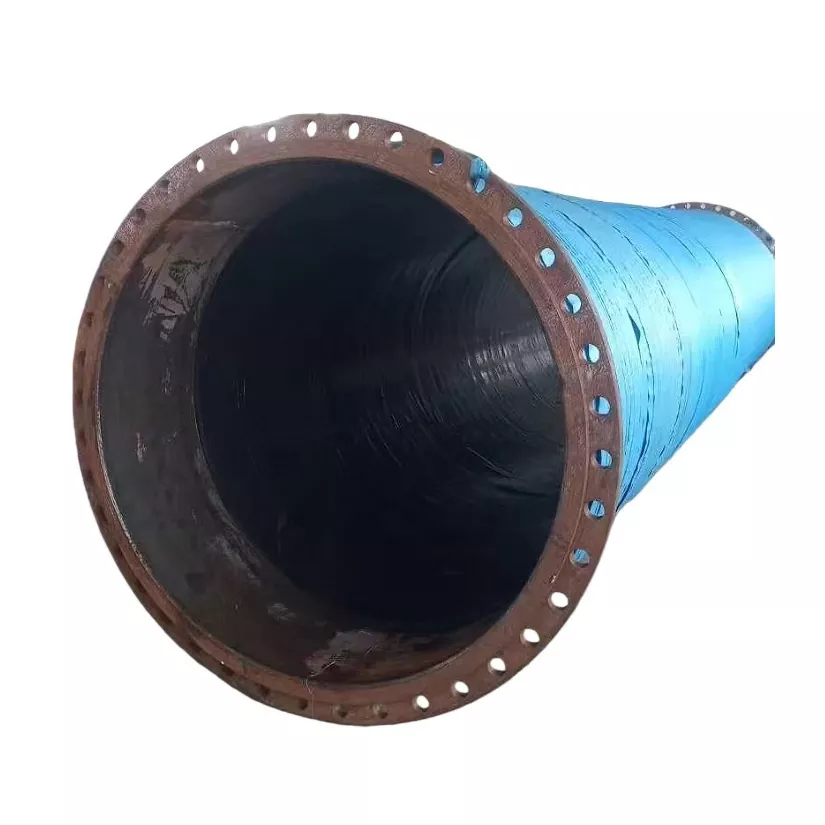
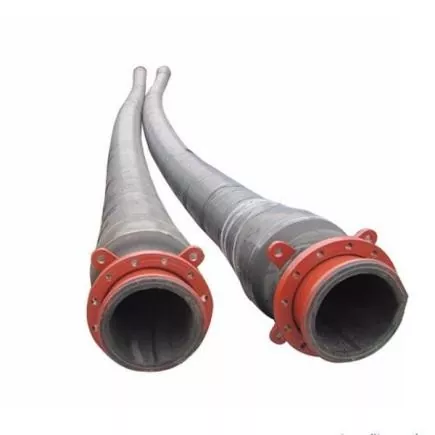
JIDONGDA offers customized configurations based on project requirements, including hose diameter, length, reinforcement structure, and flange specifications. Buyers can review the Marine Large Diameter Dredging Hose with Flanges product page for further product information.
What Are Its Main Structural Components?
The performance of a dredging hose depends on the compatibility of its components rather than diameter alone. A typical reinforced rubber hose assembly may incorporate the following elements, with the final construction determined by its intended duty.
1. Abrasion-Resistant Inner Rubber
The inner lining contacts the transported slurry directly. Its rubber formulation and thickness should reflect the hardness, concentration, and particle size of the conveyed material. Appropriate wear resistance helps limit internal deterioration during continuous transport.
2. Reinforcement Layers
Textile reinforcement, steel wire, or a combination of reinforcement materials may be selected according to the hose design. Discharge hoses require adequate resistance to internal pressure, while suction hoses need sufficient resistance to negative pressure and collapse. These requirements should be confirmed separately.
3. Protective Outer Cover
The outer rubber cover protects the reinforcement from external abrasion, weather exposure, and environmental damage. For marine service, buyers should evaluate the suitability of the selected compound for seawater exposure, ultraviolet radiation, temperature changes, and contact with surrounding equipment.
4. Flanged End Connections
Flanges connect the hose to compatible equipment and pipeline sections. Important considerations include flange material, nominal diameter, pressure rating, drilling pattern, sealing surface, and bolt arrangement. Accurate matching helps reduce leakage risks and installation difficulties.
- Inner lining: selected for the transported medium and wear conditions.
- Reinforcement: selected for pressure, vacuum, bending, and structural requirements.
- Outer cover: selected for the expected external environment.
- Flanges: matched to the connecting pipeline and operating conditions.
What Benefits Does It Offer in Marine Engineering?
High-Volume Material Transportation
A large-diameter hose provides a substantial flow passage for dredging mixtures. When its diameter is correctly matched to the pump and pipeline, it can support the movement of large volumes of sediment and water while helping engineers manage flow resistance and system capacity.
Flexible Pipeline Connections
Rubber hose sections can accommodate certain movements and alignment variations that rigid pipes cannot easily absorb. This flexibility can be valuable around dredgers, pumps, floating lines, and equipment interfaces. However, allowable bending angles and movement limits must follow the manufacturer's specifications.
Improved Abrasion Management
Sand and sediment can gradually wear the hose lining. Selecting a suitable abrasion-resistant compound and wear-layer thickness helps address this challenge. Actual service life depends on particle characteristics, concentration, velocity, operating hours, and maintenance practices.
Convenient Flanged Installation
Bolted flange connections provide a defined interface between the hose and the pipeline. Correctly matched connections can simplify assembly and replacement without requiring the entire pipeline section to be dismantled.
Project-Specific Configuration
Marine projects rarely share identical operating conditions. Customizable diameter, length, reinforcement, and flange arrangements allow the hose assembly to be matched to the dredging equipment and site layout instead of relying on a one-size-fits-all specification.
Where Is This Dredging Hose Commonly Used?
A Marine Large Diameter Dredging Hose with Flanges can serve a range of material-transfer duties when its construction and ratings match the application.
- Harbor and port dredging: transporting sediment during channel maintenance and berth-depth restoration.
- River and estuary dredging: moving mud, silt, sand, and water from excavation areas.
- Land reclamation: conveying dredged material as part of suitable hydraulic filling systems.
- Coastal engineering: supporting sediment transfer for beach nourishment and related marine construction work.
- Slurry pumping systems: connecting pumps to compatible discharge pipelines.
- Selected underwater connections: providing flexible pipeline sections where the hose design and installation conditions permit submerged service.
For each application, engineers should distinguish suction service from discharge service. A hose suitable for positive-pressure transport is not automatically suitable for vacuum operation or continuous underwater use.
How Should Buyers Select the Right Hose?
Choosing a hose based only on nominal diameter or purchase price can lead to premature wear, connection incompatibility, or operational problems. A more reliable selection process starts with the actual working conditions.
Step 1: Identify the Conveyed Material
Specify whether the hose will transport water, fine silt, sand, gravel-bearing slurry, or another particulate mixture. Include the particle size, hardness, concentration, and expected flow characteristics when available.
Step 2: Confirm Pressure and Vacuum Requirements
Determine the normal and maximum operating pressure for discharge service. For suction service, establish the required vacuum resistance. Also consider pressure surges, pump startup, shutdown, and other transient conditions.
Step 3: Measure the Connection Dimensions
Confirm the nominal and actual hose bore, flange outside diameter, bolt-hole arrangement, sealing face, and mating equipment dimensions. Providing a flange drawing or sample connection can help reduce specification errors.
Step 4: Evaluate Installation Conditions
Document the required hose length, minimum bending radius, movement allowance, installation orientation, and whether the line will float, remain onshore, or operate underwater. These details influence the appropriate hose construction.
Step 5: Request Written Technical Confirmation
Before ordering, ask the supplier to confirm the operating limits, materials, dimensional tolerances, flange configuration, inspection requirements, and any project-specific compliance documentation.
Which Technical Specifications Should Be Compared?
The following table summarizes the principal parameters buyers should include in a technical inquiry. These are selection criteria, not guaranteed ratings for every JIDONGDA hose model. Final values should be confirmed for the specific product configuration.
| Specification | What to Confirm | Why It Matters |
|---|---|---|
| Inner diameter | Required nominal bore in mm or inches | Influences flow capacity and pipeline compatibility |
| Hose length | Overall length and dimensional tolerance | Determines installation fit and connection spacing |
| Working pressure | Rated pressure under specified conditions | Ensures suitability for discharge service |
| Vacuum resistance | Permitted negative pressure, where applicable | Helps prevent collapse during suction operation |
| Rubber compound | Inner lining and outer cover materials | Addresses abrasion and environmental exposure |
| Reinforcement | Material, construction, and reinforcement layers | Supports pressure resistance and structural stability |
| Flange configuration | Material, standard, dimensions, and bolt pattern | Ensures compatibility with mating equipment |
| Operating environment | Temperature, seawater exposure, and installation method | Helps determine material and construction suitability |
| Inspection requirements | Specified dimensional and pressure-related checks | Supports procurement verification and safe installation |
For project-specific sourcing, buyers can also compare the supplier's large diameter dredging hose options and large diameter suction and discharge hoses to identify the most relevant configuration.
How Can Installation and Maintenance Improve Service Life?
Even a correctly specified dredging hose can experience premature damage if installed or operated incorrectly. A documented inspection routine helps identify potential issues before they interrupt project operations.
Installation Best Practices
- Verify the hose identification, dimensions, pressure rating, and service designation before installation.
- Inspect the hose body, flange faces, sealing surfaces, and reinforcement areas for visible damage.
- Align mating flanges correctly and use compatible gaskets and bolts.
- Tighten fasteners according to the applicable assembly procedure and specified requirements.
- Support the pipeline adequately and prevent the hose from carrying unintended loads from misaligned equipment.
- Maintain the specified bending radius and avoid twisting, kinking, or sharp-edge contact.
- Commission the system under an approved procedure, checking for leakage and abnormal movement.
Routine Inspection Checklist
- Check for cracks, bulges, exposed reinforcement, cuts, and abnormal deformation.
- Inspect flange joints for leakage, loose fasteners, corrosion, and damaged sealing surfaces.
- Monitor changes in pressure, flow, vibration, and pump performance.
- Look for unusual wear associated with sediment concentration or changes in flow conditions.
- Record inspection findings and replace the hose when damage or operating limits require it.
Inspection frequency should reflect the severity of service, operating hours, manufacturer recommendations, and applicable site safety procedures. Never attempt to tighten or repair a pressurized hose assembly while it remains in service.
Frequently Asked Questions
1. What materials can a Marine Large Diameter Dredging Hose with Flanges transport?
It can be configured for suitable mixtures of water, silt, sand, slurry, and other particulate materials. The correct inner rubber compound and reinforcement depend on particle hardness, size, concentration, flow conditions, and operating pressure.
2. Can the hose be used for both suction and discharge?
Some configurations are designed for suction, others for discharge, and some systems require separately specified hose types. Confirm both the working-pressure rating and vacuum resistance before selecting a model for combined or suction service.
3. Are custom diameters and flange dimensions available?
JIDONGDA indicates that hose diameter, length, reinforcement, and flange configurations can be customized according to project requirements. Buyers should provide drawings, connection measurements, and the intended operating conditions for technical review.
4. How do flanged connections improve installation?
Flanges provide bolted interfaces between compatible hose assemblies and pipeline components. When their dimensions and sealing arrangements match, they make installation, inspection, and replacement more manageable.
5. Can this hose be installed underwater?
Certain configurations may be suitable for underwater flexible connections, but underwater use must be confirmed for the specific assembly. Pressure, buoyancy, external loads, sealing, depth, and installation methods all require evaluation.
6. What information is needed to request a quotation?
Prepare the required inner diameter, hose length, transported medium, working pressure or vacuum, temperature range, flange standard and dimensions, reinforcement requirements, installation environment, order quantity, and delivery destination. Drawings and photographs of existing connections can also help clarify requirements.
7. How can buyers help extend the hose's service life?
Select a hose matched to the material and operating conditions, maintain correct alignment and bending limits, avoid pressure or vacuum overload, inspect the assembly regularly, and replace damaged components promptly.
Conclusion: Choosing a Reliable Dredging Hose Supplier
A Marine Large Diameter Dredging Hose with Flanges is an important component in dredging, sediment transport, slurry pumping, and marine infrastructure projects. Its performance depends on the correct combination of diameter, rubber formulation, reinforcement, pressure or vacuum resistance, flange compatibility, and installation conditions.
For procurement teams, the best approach is to define the operating requirements first and then evaluate the hose configuration against those requirements. Clear specifications and technical confirmation can help reduce connection errors, manage abrasion-related wear, and support dependable pipeline operation.
Whether you are sourcing replacement hoses for an existing dredger or specifying a new marine pipeline system, JIDONGDA can help assess customized hose dimensions and flange configurations for your application. Visit the product page to review the available information and contact us with your drawings, technical requirements, and project details to request a suitable solution and quotation.
Related News
- How Can a Wire Reinforced Large Diameter Flanged Rubber Hose Improve Heavy-Duty Material Transfer Efficiency
- How Can a Large Diameter Heavy-Duty Flanged Rubber Hose Improve Reliability in Demanding Industrial Applications
- Why Should You Choose a Stainless Steel 316L Ferrule for Reliable, Corrosion-Resistant Piping Connections
- How Can a Large Diameter Flexible Flanged Rubber Hose Improve Heavy-Duty Pipeline Connections
- How Can a Double Sphere Rubber Expansion Joint Improve Pipeline Flexibility and Vibration Control
- How Can a Corrugated Metal Expansion Joint Improve the Reliability of High-Temperature Piping Systems
Leave me a message